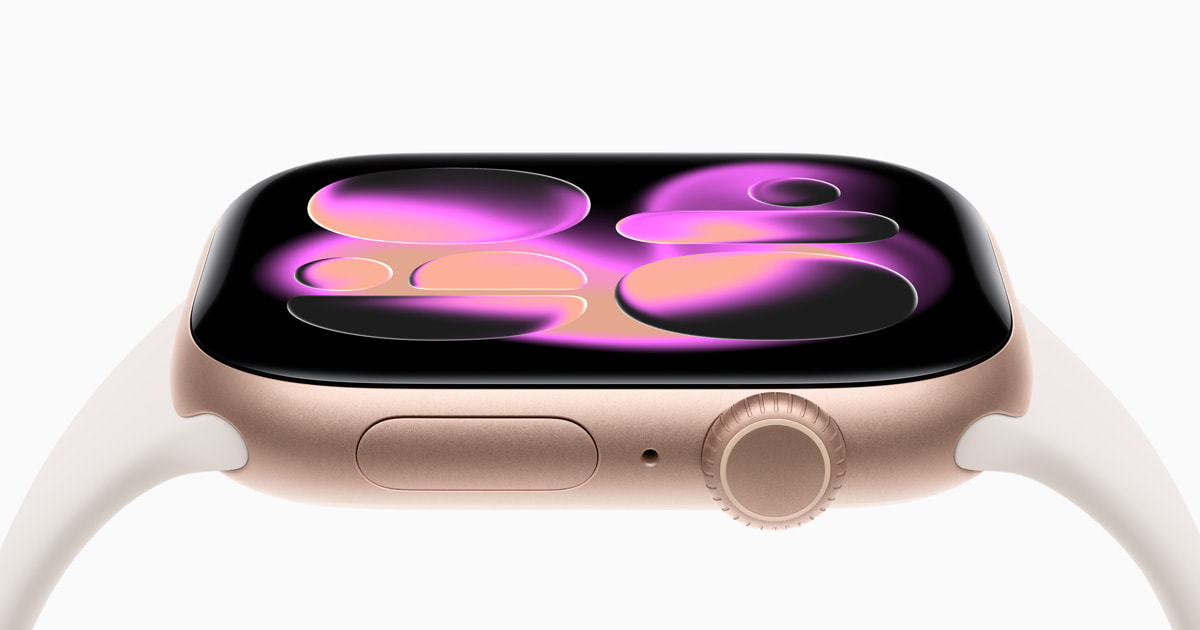
Apple Watch Series 12 takes more readings. What does the accuracy study actually prove?
The new sensor system comes with a large comparative study, a readiness score and several later software promises. The details matter more than the superlative.
 SmartWearGuide · 2026-10-12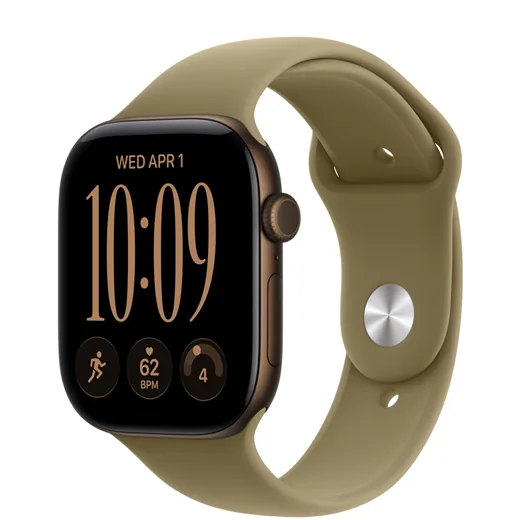
A real hardware update with a specific claim
Apple announced Watch Series 12 on September 9 and scheduled availability for September 18. The new Health Sensing System combines updated optical and electrical sensors with its S11 chip. Apple says the watch now records background heart rate every five seconds and measures HRV up to 24 times more frequently, feeding features including a readiness score.
The interesting change is not simply that a number can update faster. A wearable has to collect an interpretable signal while its wearer moves, grips objects and gets on with the day. More opportunities to sample may produce a richer record, but the quality of the signal and the rules used to summarize it still matter. A buyer should therefore ask what improved in a task they actually perform, rather than treating a higher sampling frequency as a complete statement of accuracy.
The study has more substance than a tiny demo
Apple's September white paper enrolled 1,460 people, with 1,254 contributing to the final paired analysis. It compared Series 12 with six other wearables against a Polar H10 ECG chest strap, across exercise and daily activities at five sites. The manufacturer reports statistically better overall error results for its watch in the protocols studied.
It is still Apple's study, with a defined device set and collection method. The report also contains exclusions, including tattoos or large moles at the device site. That matters when someone tries to stretch the result into a claim about every possible wearer. The paper provides useful comparative evidence in its tested conditions. It does not tell us that every future firmware version, individual activity or unusual fit will produce the same ordering.
Better than a comparator is not the same as an error of zero
The white paper presents differences between devices' error metrics. It does not provide a simple table of absolute mean error for every device in every activity. That leaves a gap between its comparative conclusion and the ordinary shopper's question of how many beats a reading might be off.
This is our interpretation of the reporting format, not an independent reanalysis of the raw measurements. A device can improve on another and still make occasional errors; a small difference can also be statistically persuasive in a large dataset. For a practical follow-up, we want dated tests that show the complete traces, reference device, activity and fit. A sprint interval, a steady run and household movement can expose different weaknesses. None should be averaged into a promise that the watch cannot miss a transition.
More information and more interpretation arrive together
The launch also describes new readiness and longer-term health features. A score combines measurements into an interpretation designed to be easier to act on than a page of graphs. The appeal is understandable: few people want to study a signal trace before breakfast.
We would judge that convenience by transparency. Can you see which inputs changed the score? Does a missed night of data remain obvious? Can you distinguish a measurement from a recommendation? Those questions are useful regardless of brand. A low score may prompt a closer look at your routine, but it is not a complete explanation of why you feel tired. Health-related decisions need context beyond a wearable's summary, especially when symptoms and the displayed number disagree.
The software map is part of the launch
Not everything described alongside Series 12 is available everywhere. Apple says some Audio Intelligence features arrive later in the year, while its September 14 software notice excludes the initial Siri AI rollout on watchOS in the EU and describes separate restrictions in China. A hardware purchase does not erase those conditions.
For an international guide, this is central to the product rather than fine print. A US demonstration can show a feature that a European buyer cannot currently activate. Our advice is to build the comparison around today's supported functions in your country and language, then mark later features as a reason to revisit the decision. Do not let an attractive roadmap carry the buying case if the one feature you need is still region-limited.
Apple: Siri AI rollout and regional limits, September 14, 2026 ↗ · Apple: Apple Watch Series 12 announcement ↗
The upgrade decision should begin with a missing task
The strongest reason to upgrade is a specific task your present device handles poorly: unreliable recording during a particular workout, a fit issue or a feature you can use today. The weakest reason is that a launch headline declares the latest product the most advanced.
Series 12 deserves attention because Apple has supplied a substantial comparative study as well as a new sensing system. The next step is to match that evidence to the owner's actual use. Check the reference tests, supported country features and charging routine, then compare a complete day rather than isolated specification wins. For someone already getting useful data from an older watch, a richer measurement stream may be interesting without immediately making their current device inadequate. The useful outcome is better information you understand, not a larger collection of numbers you are expected to trust.
SmartWearGuide analysis
About this article
Original analysis checked October 12, 2026, using Apple's launch notice, nine-page heart-rate study and software rollout notice. Manufacturer-conducted comparative evidence is not a universal clinical ranking. SmartWearGuide has not tested Watch Series 12.