Chest strap or optical sensor? The useful difference is the signal, not the slogan.
Electrical and optical trackers observe different parts of a heartbeat. Research shows why placement, movement and the reference device matter more than blanket accuracy claims.
 SmartWearGuide · 2026-10-12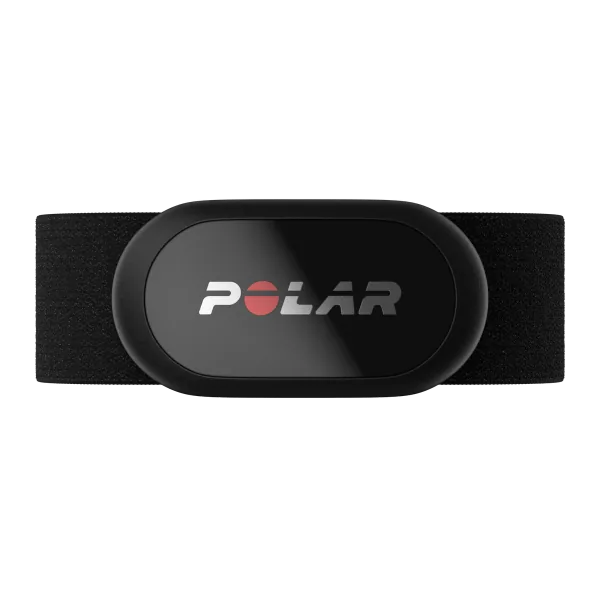
Two routes to a number called heart rate
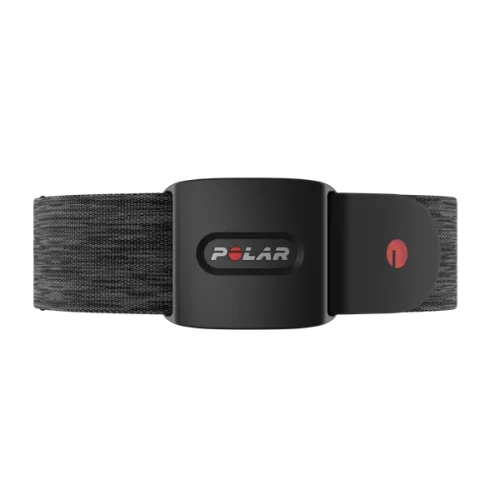
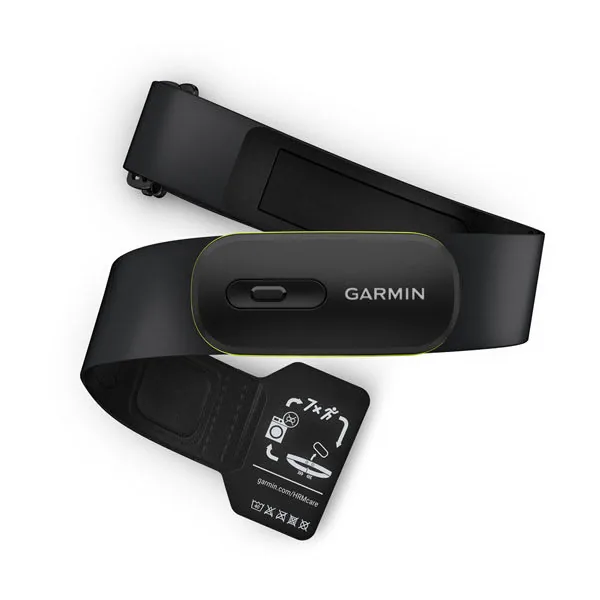
An ECG-based chest sensor such as Polar H10 observes electrical activity through skin-contact electrodes. Heart-rate and beat-interval calculations can use the prominent electrical features of each cardiac cycle. An optical sensor instead illuminates tissue and measures tiny changes in reflected light associated with blood flow. Both can display beats per minute, but they are extracting that answer from different signals.
The distinction explains why matching numbers at rest is only a starting point. A technology label does not tell you how well a complete product handles movement, contact or a changing pulse. The sensor, its position and its processing all contribute. A fair comparison therefore names an activity and a wearing arrangement before it declares one device more accurate.
Polar Research Center: Wrist-ECG white paper, October 10, 2023 ↗ · Polar: optical measurement placement, motion and skin-contact guidance ↗ · Schweizer and Gilgen-Ammann: arm/wrist heart-rate validation, JMIR Cardio, March 21, 2025 ↗
The optical challenge is separating pulse from movement
Polar's guidance warns that movement between an optical sensor and the skin can interfere with readings. Irregular hand movement and pressure on the arms can make measurement harder; cold conditions can weaken the skin's circulation signal. These are reasons a tracker may struggle in a particular session even if it performs well during an easy run.
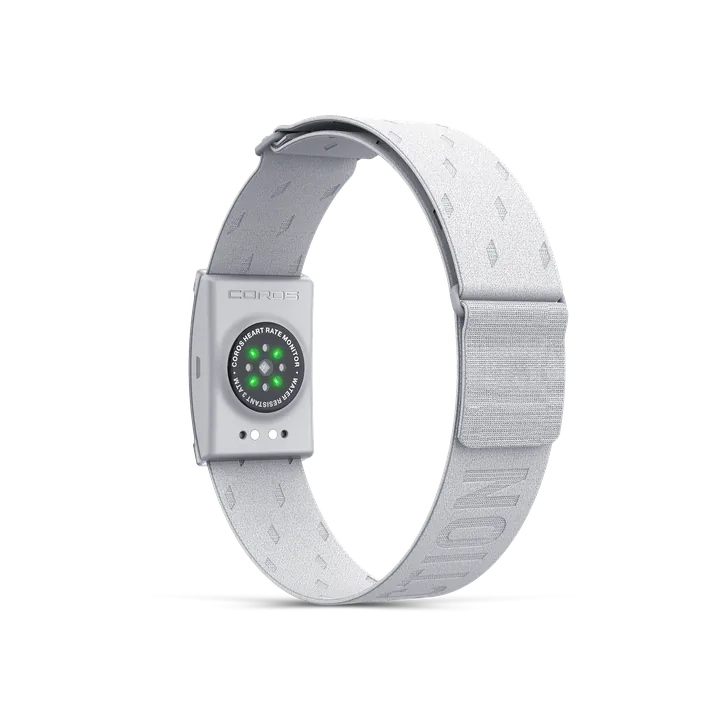
The useful response is to look for a reproducible pattern, rather than dismissing every odd number as a broken algorithm. Does it happen while gripping equipment, in cold weather, or only when the strap is loose? An arm-mounted optical sensor also deserves its own evaluation. Moving the same general measurement method away from the wrist changes the contact and motion problem it must solve.
Polar: optical measurement placement, motion and skin-contact guidance ↗ · Schweizer and Gilgen-Ammann: arm/wrist heart-rate validation, JMIR Cardio, March 21, 2025 ↗
- ECGChest electrodesSense electrical activity
- ECGECG processingIdentifies beat timing
- PPGWrist LED + detectorSense blood-volume changes
- PPGPPG processingEstimates pulse timing
The first two stages describe an electrical chest sensor; the last two describe an optical wrist sensor. The optical signal follows the heart’s electrical activity and can be affected by motion.
SmartWearGuide illustration · Sources in the articleAn upper-arm study challenges the easy hierarchy
In a 2025 JMIR Cardio study, Theresa Schweizer and Rahel Gilgen-Ammann tested 16 healthy adults through nine activities, repeated twice. Against the Polar H10 reference, upper-arm Verity Sense produced a mean absolute error of 1.43 beats per minute overall. The wrist-worn Vantage V2 on the nondominant arm had 6.41. Placement and product therefore mattered greatly within this particular comparison.
The limits matter too. Participants had Fitzpatrick skin types I and II, results used cleaned data averaged over ten-second intervals, and the sample was small. The result supports taking a well-fitting arm sensor seriously. It does not establish that every optical tracker matches a chest strap, or that the same errors apply across skin types and every sport.
Schweizer and Gilgen-Ammann: arm/wrist heart-rate validation, JMIR Cardio, March 21, 2025 ↗
High intensity does not automatically defeat the wrist
A separate 2026 JMIR Cardio study tested Galaxy Watch 6 against H10 during incremental exercise in 55 healthy adults. Its table reports a median absolute error of three beats per minute at 50-60 percent of maximal heart rate, and one at 90-100 percent. The wrist device was not simply worst at the highest tested intensity. That is a useful correction to a familiar assumption.
The study also reports correlation, agreement and root-mean-square error. These statistics answer different questions; a small median error does not mean every individual reading is close. Its specific exercise protocol and Watch 6 result should not be transferred to weights, outdoor intervals or a later watch generation without evidence. A broad claim about wrist tracking loses the details that make a test useful.
The reference sensor can fail too
The 2025 arm-versus-wrist researchers discarded ten percent of raw reference data from three participants after identifying H10 outliers, potentially caused by positioning or displacement. The chest strap was the criterion device, but still required quality control. This is a particularly useful detail when a review treats every disagreement with a strap as the watch's error.
A credible comparison checks the reference trace, reports missing or rejected data and explains its time averaging. Session averages alone can conceal short mismatches. For your own sports tracking, a sudden implausible jump deserves a fit and connection check on both devices. Electrical measurement has a strong measurement rationale, but a poor physical recording does not become reliable merely because its label says ECG.
Schweizer and Gilgen-Ammann: arm/wrist heart-rate validation, JMIR Cardio, March 21, 2025 ↗ · Polar Research Center: Wrist-ECG white paper, October 10, 2023 ↗
Buy for the decision you need to make
If heart-rate feedback determines how you pace a specific session, seek validation in that activity and check whether your watch or app can receive the external sensor's data. If comfort is what keeps you recording consistently, an arm sensor may be a useful compromise. If you mainly want broad routine trends, a convenient wrist device can answer a different, less time-sensitive question.
Also separate continuous sports heart rate from an on-demand ECG feature. Polar's wrist-ECG explanation describes completing an electrical path by touching an electrode with the opposite hand; that is a different interaction from continuous optical exercise recording. A watch listing both PPG and ECG does not mean its entire workout trace comes from ECG. The purchase decision becomes clearer when you ask which sensor supplies the number you will actually use.
Polar Research Center: Wrist-ECG white paper, October 10, 2023 ↗ · Polar: optical measurement placement, motion and skin-contact guidance ↗ · Schweizer and Gilgen-Ammann: arm/wrist heart-rate validation, JMIR Cardio, March 21, 2025 ↗ · JMIR Cardio: Galaxy Watch 6 during maximal exercise, 2026 ↗
About this article
Original technical explainer based on official measurement documentation and two peer-reviewed primary validation studies. Figures apply to their named devices, participants and protocols. This covers sport tracking, not diagnostic ECG interpretation. No SmartWearGuide laboratory testing was performed.