Shokz OpenFit Pro: the reviews agree on comfort, then split over noise reduction
Three testing teams found a useful open-ear design. Their different reactions to cancellation and calls show exactly what to try before buying.
 SmartWearGuide · 2026-10-12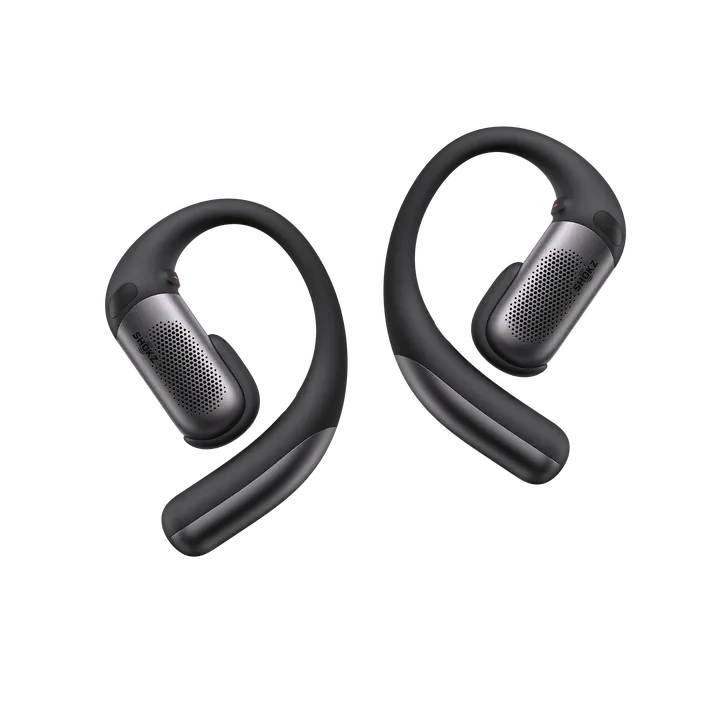
The product makes an unusual promise
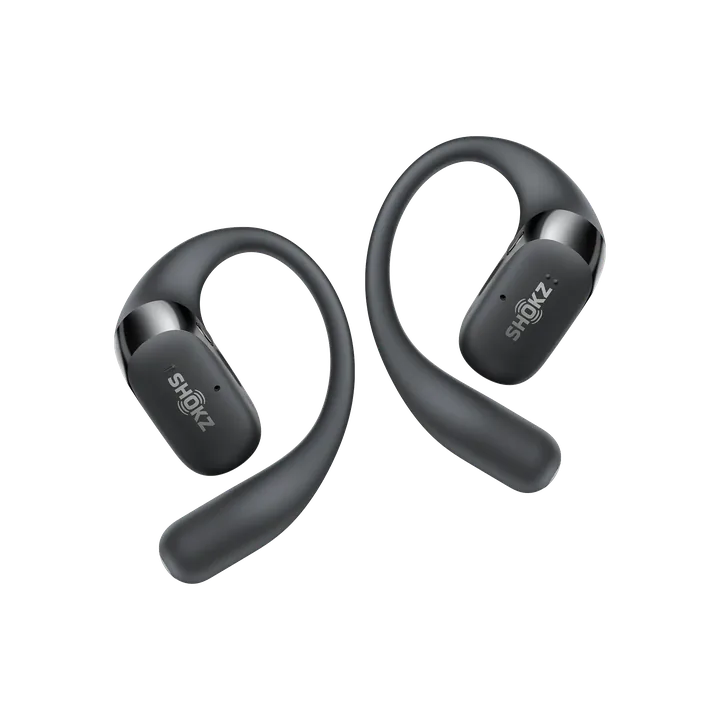
OpenFit Pro plays sound through air-conduction speakers beside the ear, rather than sealing the ear canal or vibrating the skull. Shokz adds active noise reduction to that deliberately open arrangement. Its official US page lists $249.95 at this check. The attraction is focused listening while remaining connected to the room; the complication is deciding how much background sound you actually want removed.
This roundup draws on Adam Birney's two-week SoundGuys test, Alice Clarke's roughly month-long GadgetGuy review, and RTINGS' bought-and-tested evaluation by Dagobiet Morales Alfaro, Christopher Steward and John Peroramas. They assessed the same Pro model, but used different environments and expectations. Their disagreement is more helpful than a single averaged rating.
Shokz: OpenFit Pro specifications and noise-reduction FAQ ↗ · SoundGuys: Adam Birney tests OpenFit Pro for two weeks, January 22, 2026 ↗ · GadgetGuy: Alice Clarke tests OpenFit Pro for roughly a month, January 6, 2026 ↗ · RTINGS: OpenFit Pro lab and fit review, April 23 / August 28, 2026 ↗
A theatre and a laboratory tell different stories
Clarke found the noise reduction useful while writing in a theatre with loud advertisements repeating. It softened the distraction enough to let her concentrate. Birney also heard office conversations and background hum recede, but experienced a persistent pressure sensation that limited the benefit. RTINGS judged travel isolation poor, with little relief from engine sound and only limited midrange attenuation.
These findings describe a narrow use case, rather than a contradiction that needs a winner. A feature can make an irritating room more tolerable without turning it into silence. Someone seeking relief from a repetitive announcement may value that change; someone measuring protection from a flight's continuous roar may dismiss it. Try cancellation in the place where you expect to use it.
GadgetGuy: Alice Clarke tests OpenFit Pro for roughly a month, January 6, 2026 ↗ · SoundGuys: Adam Birney tests OpenFit Pro for two weeks, January 22, 2026 ↗ · RTINGS: OpenFit Pro lab and fit review, April 23 / August 28, 2026 ↗
Fit depends on everything else on your ears
RTINGS found a secure fit for running, while noting that glasses could reduce stability and that the included support accessories could help. Birney reported better stability than his experience with OpenFit 2+, but remained aware of the Pro's contact points during long wear. Clarke liked the firmer hook and found herself forgetting to remove the earbuds after using them.
The practical test is more specific than whether an earbud feels comfortable for thirty seconds. Wear it with your usual glasses, turn your head, speak, and check whether a hook competes with the glasses arm. A stable fit and an invisible-feeling fit are separate qualities. There is no reason to expect another reviewer's ear shape to settle that choice for you.
RTINGS: OpenFit Pro lab and fit review, April 23 / August 28, 2026 ↗ · SoundGuys: Adam Birney tests OpenFit Pro for two weeks, January 22, 2026 ↗ · GadgetGuy: Alice Clarke tests OpenFit Pro for roughly a month, January 6, 2026 ↗
Better bass still means open-ear bass
Clarke heard substantially more musical detail and a more useful driving beat than on the earlier OpenFit pair she used. RTINGS' evaluation was more restrained: the Pro reproduced the punch of kick drums, but lacked deep bass rumble. Those judgments can coexist. Improvement over an older open design does not establish equivalence to a sealed earbud.
For a buyer, separate intelligibility, rhythm and immersion. A podcast can remain understandable with modest low-frequency output. A workout playlist can feel energetic without reproducing the lowest notes fully. An album listener seeking an enveloping, consistent presentation has a different target. Listen to the same familiar recording in your ordinary room, then outside, rather than deciding from a demonstration in ideal surroundings.
GadgetGuy: Alice Clarke tests OpenFit Pro for roughly a month, January 6, 2026 ↗ · RTINGS: OpenFit Pro lab and fit review, April 23 / August 28, 2026 ↗
Calls deserve their own audition
Birney liked call quality in ordinary conditions but found strong wind a serious problem. Clarke was less pleased even outside away from wind: callers described her voice as thin and compressed. RTINGS considered the microphone intelligible, with a thin presentation. The microphone therefore remains a decision point, even if the earbuds suit your listening habits.
A quick voice memo can reveal how a microphone sounds to you, but a real call reveals whether the other person can follow conversation when you move between rooms. Test with your actual phone and calling app. Clear playback in your ears says little about the sound arriving at the far end. If work calls are the main purpose, give that trial equal weight to music.
SoundGuys: Adam Birney tests OpenFit Pro for two weeks, January 22, 2026 ↗ · GadgetGuy: Alice Clarke tests OpenFit Pro for roughly a month, January 6, 2026 ↗ · RTINGS: OpenFit Pro lab and fit review, April 23 / August 28, 2026 ↗
Read the battery promise with the switch position
Shokz rates playback at up to 12 hours per charge with noise reduction off, or six with it on. The corresponding totals including the case are 50 and 24 hours. RTINGS measured 5.6 hours with cancellation enabled. These figures describe different settings, and the case total does not mean uninterrupted listening without returning the earbuds to it.
The best candidate is someone who already wants open ears and sees partial noise reduction as a situational bonus. If that setting feels uncomfortable or provides little help in your environment, compare the Pro's sound and fit against the cheaper model without counting cancellation as added value. If your main problem is travel noise, the reviews provide little reason to choose an open design for that job.
Shokz: OpenFit Pro specifications and noise-reduction FAQ ↗ · RTINGS: OpenFit Pro lab and fit review, April 23 / August 28, 2026 ↗ · SoundGuys: Adam Birney tests OpenFit Pro for two weeks, January 22, 2026 ↗
About this article
Original synthesis of named first-person and laboratory reviews from January to August 2026, checked October 12. SmartWearGuide has not tested these earbuds. Manufacturer specifications are distinguished from reviewers' observations; disagreement is preserved rather than averaged into a score.