
Keio University Embodied Media
MetaLimbs
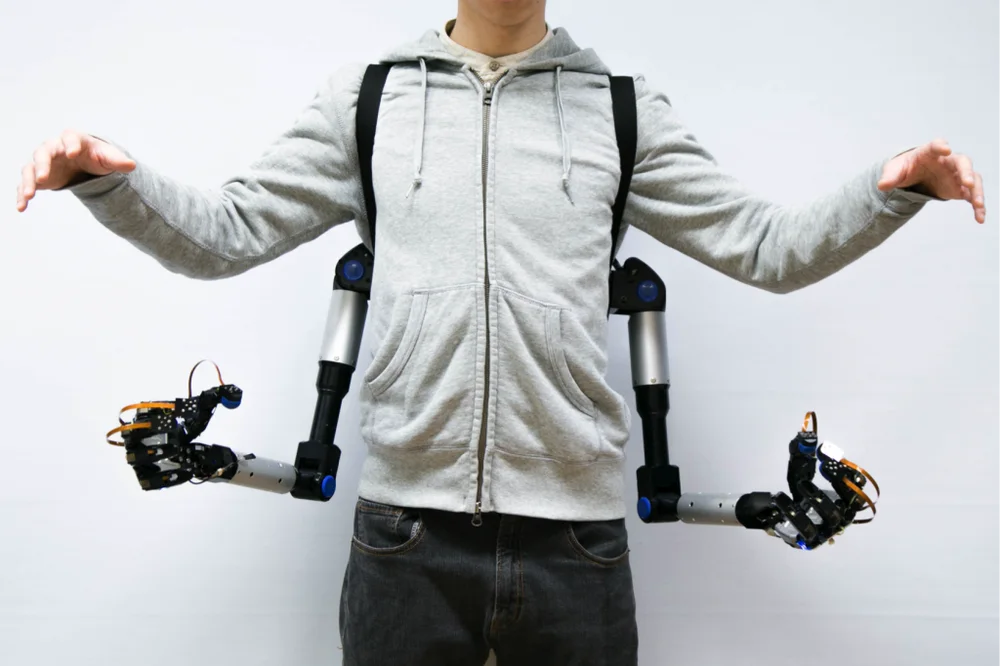
Research on controlling additional robotic limbs through leg and foot movement
Price not verified
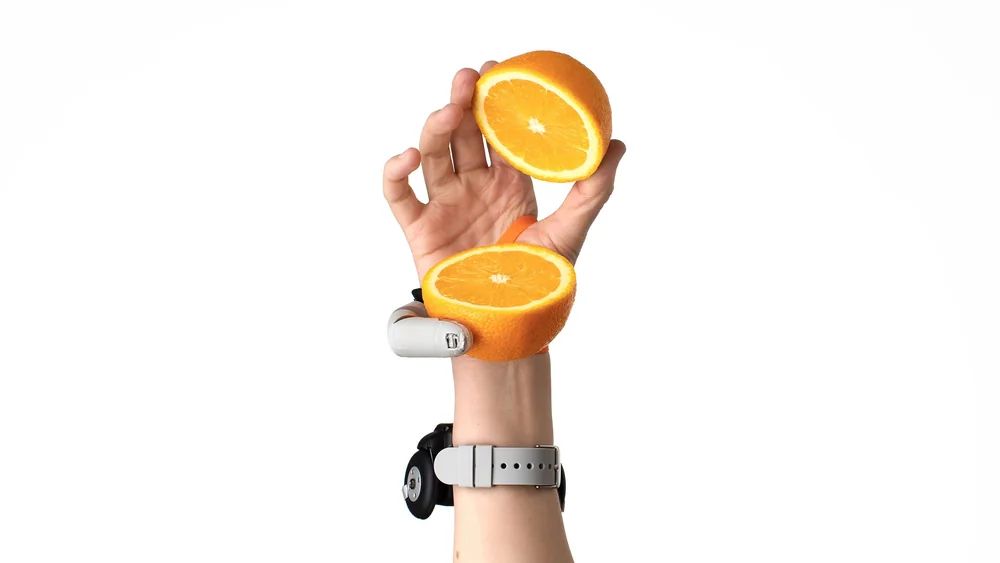
Additional robotic thumb worn on the hand and controlled using pressure beneath the toes.
University photograph of Dani Clode Third Thumb holding an orange.
An original synthesis of the linked evidence. SmartWearGuide has not hands-on tested this device.
The Third Thumb is compelling because it tests a concrete question: can a person learn to control an additional digit while keeping the existing hand useful? The wearable thumb sits opposite the biological thumb and is controlled through pressure inputs at the feet. That separates the additional movement from the hand that is already carrying out a task.
The Cambridge-hosted 2024 study goes beyond a polished demonstration. Its large, diverse participant sample examined initial usability and how people approached the augmentation. That makes it particularly informative for this guide: ease of learning can matter as much as motor strength or an impressive video. The research concerns initial use, however, and cannot establish years of comfortable work or universal suitability.
We place it first as a research project to understand, not as the best device to buy. It makes the central tradeoff of body augmentation visible: an extra capability also consumes attention and a new control channel. Future practical value depends on whether that exchange helps a specific task after training. The project is a stronger starting point for readers interested in augmentation than a speculative product that has not yet demonstrated how people actually interact with it.
Why #1 in this selectionFirst for a clear augmentation concept supported by human usability research. This is an ordering of educational and research interest, not a claim of commercial maturity or superiority to medical systems with different purposes.
The compromiseIt remains a research prototype. Early task performance cannot establish long-term comfort, workplace safety or whether foot controls fit a particular user and activity.
[1] Cambridge repository: Evaluating initial usability of a hand augmentation device across a large and diverse sample, 2024 [2] Getting to grips with an extra thumb | University of Cambridge [3] Getting to grips with an extra thumb | University of Cambridge
Research or specialist medical evidence brief. This is not a consumer hands-on review or a treatment recommendation.
Cambridge repository: Evaluating initial usability of a hand augmentation device across a large and diverse sample, 2024 Original researchGetting to grips with an extra thumb | University of Cambridge manufacturerRelease date not verified · Research or specialist clinical access
Catalogue status: Research prototype. A research publication or demonstration is not a retail release.No verified price in this audit.
Research/clinical system or custom clinical supply; paper prices, grants, treatment fees, insurance reimbursements and component costs are not a device retail price.
Research object, not a prescribed prosthesis or retail extra finger.
Prices are snapshots, not a live stock feed. Taxes, shipping, prescription lenses and accessories can change the total.
Research on controlling additional robotic limbs through leg and foot movement
Research on augmenting a human hand with two synchronised robotic fingers
Own it, tried it, or still deciding? Share what matters to you.
Start the conversation.
No comments yet. Your experience could help the next person choose.