
Our Top 10 frontier research projects
Ten technologies to understand, from extra limbs to implanted interfaces. Research and clinical access are not retail availability.
Browse & filter Categories, features & sorting
How price order works
Lowest recorded store prices take priority over announced or launch prices, within the selected source market. Currencies use the dated EUR reference rates. Deposits and recurring charges are excluded from price order; missing prices stay last. Original price records remain visible.
10 research selections
 01First rankingUnderstanding how people learn an extra body part
Dani Clode Third Thumb
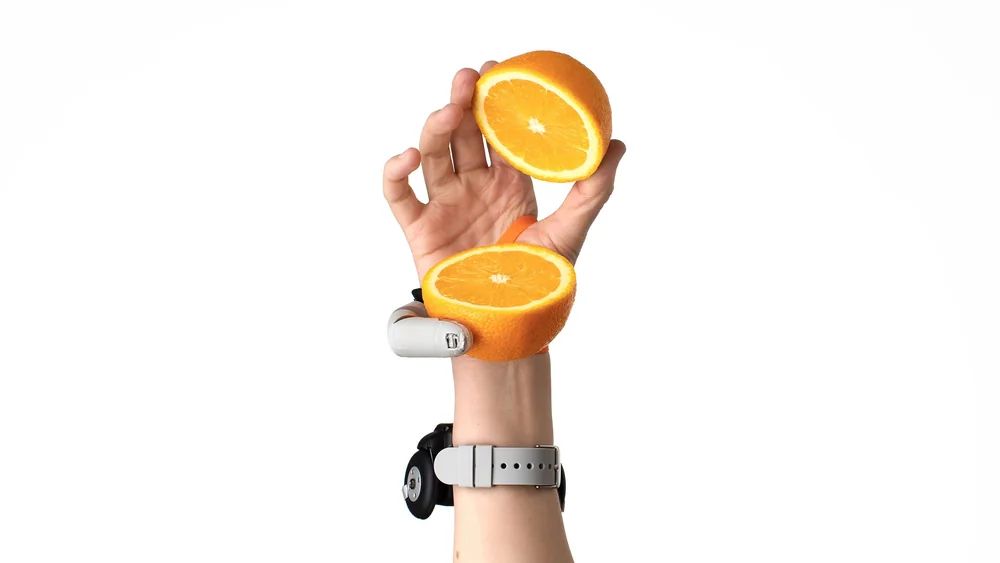
Research prototypeResearch evidence briefPrice not verifiedThe Third Thumb is compelling because it tests a concrete question: can a person learn to control an additional digit while keeping the existing hand useful? The wearable thumb sits opposite the biological thumb and is controlled through pressure inputs at the feet. That separates the additional movement from the hand that is already carrying out a task.
The Cambridge-hosted 2024 study goes beyond a polished demonstration. Its large, diverse participant sample examined initial usability and how people approached the augmentation. That makes it particularly informative for this guide: ease of learning can matter as much as motor strength or an impressive video. The research concerns initial use, however, and cannot establish years of comfortable work or universal suitability.
We place it first as a research project to understand, not as the best device to buy. It makes the central tradeoff of body augmentation visible: an extra capability also consumes attention and a new control channel. Future practical value depends on whether that exchange helps a specific task after training. The project is a stronger starting point for readers interested in augmentation than a speculative product that has not yet demonstrated how people actually interact with it.
Why #1First for a clear augmentation concept supported by human usability research. This is an ordering of educational and research interest, not a claim of commercial maturity or superiority to medical systems with different purposes.
The compromiseIt remains a research prototype. Early task performance cannot establish long-term comfort, workplace safety or whether foot controls fit a particular user and activity.
Release date not verifiedResearch or specialist clinical accessCatalogue status: Research prototype. A research publication or demonstration is not a retail release.Evidence and original sources
Research or specialist medical evidence brief. This is not a consumer hands-on review or a treatment recommendation.
 02First rankingExploring continuous blood-pressure sensing
Graphene bioimpedance e-tattoo
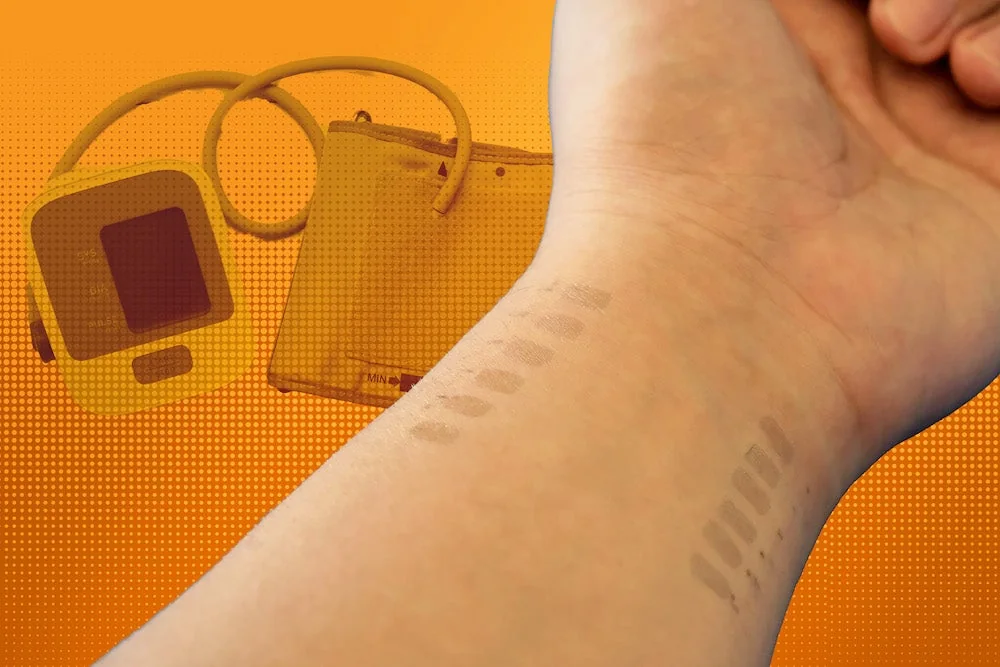
Research prototypeResearch evidence briefPrice not verifiedThis graphene e-tattoo research addresses a familiar weakness of occasional blood-pressure readings: they provide snapshots rather than a continuous picture. The thin electrodes measure electrical properties through the skin, with a machine-learning model estimating blood pressure from those signals. Its appeal is the possibility of obtaining useful trends from a less obtrusive sensor interface.
The University of Texas research report identifies the work of the Akinwande and Jafari teams and explains the bioimpedance approach. That distinction is essential. The tattoo is not simply a miniature cuff, and the skin-mounted material is only one part of a larger measurement and processing system. Published experimental performance belongs to that research setup, population and analysis, not to an independently available home product.
Its place near the top reflects a meaningful engineering direction: making sensors conform closely to moving skin while collecting a useful signal. The unanswered product questions include calibration, performance across people and everyday conditions, attachment over time and a usable complete system. A reader should follow validation and clinical translation rather than assume that a thin patch has already replaced an approved monitor. We treat it as a promising research architecture, with no retail readiness or treatment benefit inferred from its form factor.
Why #2Second for tackling a widely relevant measurement problem through a concrete sensing architecture. The rank recognises research interest and the quality of the documented concept, not validated home-use superiority.
The compromiseA laboratory estimate is not a diagnosis or a cleared consumer monitor. Calibration, population coverage and real-world validation remain essential before clinical claims or purchasing recommendations.
Release date not verifiedResearch or specialist clinical accessCatalogue status: Research prototype. A research publication or demonstration is not a retail release.Evidence and original sources
Research or specialist medical evidence brief. This is not a consumer hands-on review or a treatment recommendation.
 03First rankingStudying unobtrusive palm skin-conductance sensing
Graphene EDA palm e-tattoo
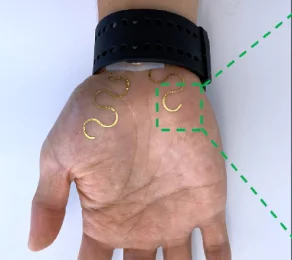
Research prototypeResearch evidence briefPrice not verifiedThe palm is a valuable but awkward place to put an electrodermal-activity sensor because the hand is constantly touching, gripping and moving. This graphene e-tattoo project focuses on preserving that useful measurement location while reducing the obstruction created by conventional electrodes and connections. Its interest lies as much in the connection to the electronics as in the thin sensing material.
Jang and colleagues' Nature Communications paper describes a flexible interface between the skin-conforming tattoo and a wrist-worn EDA unit. The authors report an ambulatory demonstration covering ordinary activities and examine how the connection tolerates stretching. That is concrete engineering evidence, though the tattoo still works with external hardware; it is not a self-contained invisible computer.
We rank it highly because reliable attachment and interconnection are practical barriers that glamorous wearable concepts often hide. Better contact could make a signal easier to collect without turning the palm into a laboratory fixture. Interpretation remains separate: a conductance change does not uniquely explain a person's emotion or diagnose stress. For readers, the important advance is an approach to wearable measurement mechanics, with the meaning of the signal and the requirements of a finished product still needing careful validation.
Why #3Third because it addresses a difficult real-world interface problem with a published experimental system. Its narrower sensing purpose makes it less broadly illustrative than the first two projects, but the engineering contribution is specific.
The compromiseThis remains a research setup connected to a wrist unit. Skin conductance is not a direct reading of thoughts, emotions or a diagnosis, and ordinary long-term product durability has not been established.
Release date not verifiedResearch or specialist clinical accessCatalogue status: Research prototype. A research publication or demonstration is not a retail release.Evidence and original sources
Research or specialist medical evidence brief. This is not a consumer hands-on review or a treatment recommendation.
Jang and colleagues: graphene e-tattoos for ambulatory palm EDA, Nature Communications 2022, author-hosted paper Original researchPalm E-tattoo Can Tell When You’re Stressed Out - Cockrell School of Engineering - University of Texas at Austin manufacturerOriginal graphene palm EDA e-tattoo research original_research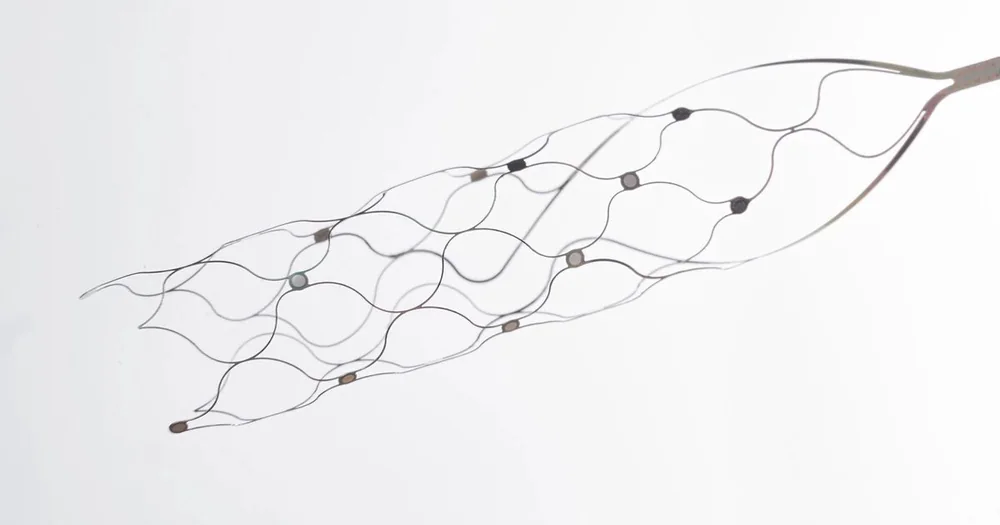 04First rankingUnderstanding an endovascular brain-computer interface
Synchron Stentrode BCI
InvestigationalResearch evidence briefPrice not verifiedStentrode explores a route to computer control for people with severe movement limitations by recording brain activity from a device placed through the vascular system. Synchron describes decoding motor intent so that a user can interact with digital tools. The relevant benefit is access to communication and control, rather than adding entertainment functions to an otherwise healthy person's wearable collection.
The endovascular approach is the project's defining distinction. It should be understood as a different clinical delivery strategy, not as proof of lower overall risk or better performance than every other implanted interface. The company's technology explanation establishes the intended system; it is not an independent comparison of long-term outcomes or a guarantee that any individual will qualify.
Its high position reflects the importance of the access problem and the concrete route being investigated. A useful review must also keep the full system in view: an implanted recording component, signal interpretation, a usable computer interface and clinical support all matter. Stentrode remains investigational in this catalogue. Readers should evaluate trial evidence and eligibility through clinical channels rather than treating a successful demonstration as a broadly available service or assuming it restores natural movement.
Why #4Fourth for a distinct clinical approach to a consequential computer-access problem. Its position compares research themes, not patient outcomes, and does not imply a recommendation over another brain-computer interface.
The compromiseInvestigational clinical access, implantation and ongoing support are central constraints. Manufacturer descriptions do not establish universal eligibility, comparative surgical risk or durable effectiveness for every user.
Release date not verifiedResearch or specialist clinical accessCatalogue status: Investigational. A research publication or demonstration is not a retail release.Evidence and original sources
Research or specialist medical evidence brief. This is not a consumer hands-on review or a treatment recommendation.
 05First rankingUnderstanding a high-channel implanted interface
Neuralink investigational BCI
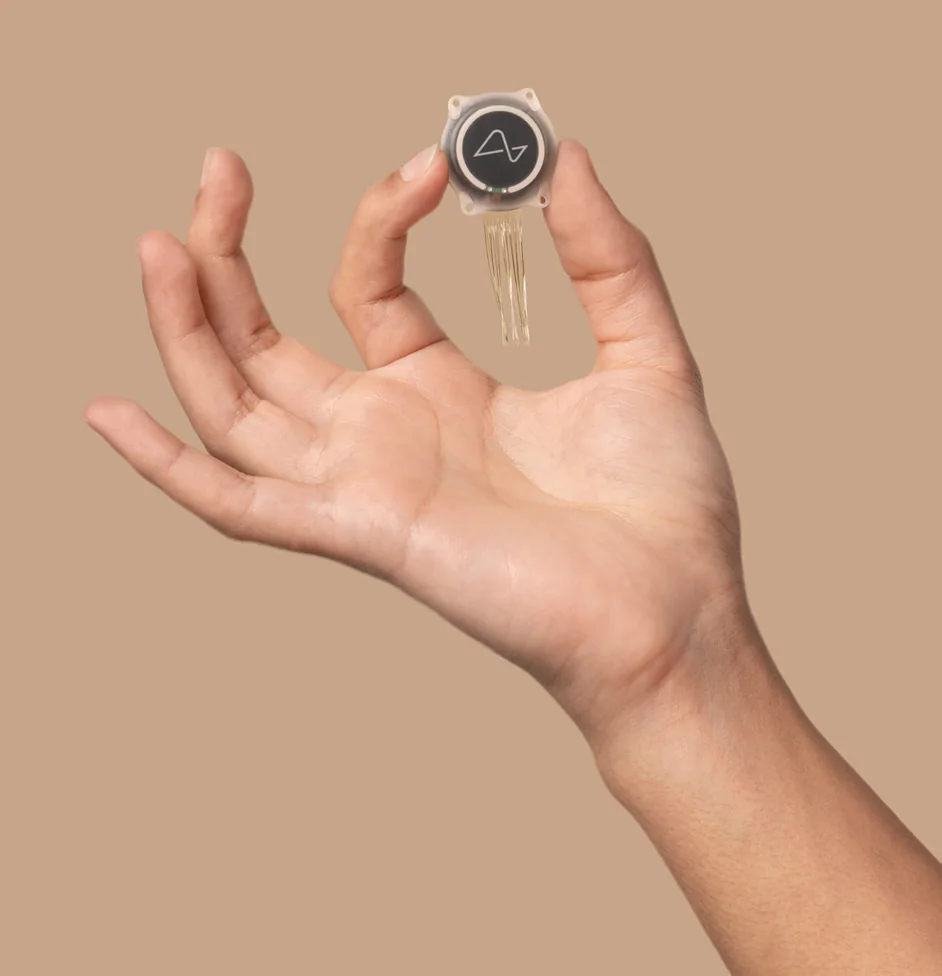
InvestigationalResearch evidence briefPrice not verifiedNeuralink's investigational system combines a surgically implanted recording device with a computer-control objective. Its PRIME study material describes the N1 implant, fine recording threads and a purpose-built insertion robot. For a reader interested in wearables, the significant shift is that the interface is no longer worn on the surface: sensing, maintenance and access become clinical questions.
The study brochure specifies an early investigation of safety and initial functionality for people with substantial movement impairment. Its channel count is a design fact, not a consumer performance score. More recording sites alone cannot establish better everyday communication, fewer complications or less training than another approach. The long follow-up commitment described in the study also underlines that implantation is not equivalent to trying a removable headset.
We include Neuralink because it makes the ambitions and tradeoffs of implanted control tangible. Its research significance is substantial, but the useful questions are about dependable control, daily support and outcomes over time. This entry does not generalise from a demonstration to treatment success or from one participant to all potential users. It belongs in a research selection with explicit investigational status, rather than alongside ordinary products someone can order and return.
Why #5Fifth as a prominent, clearly specified investigational architecture. It follows Stentrode to show a contrasting implantation approach; this ordering is not evidence that either is clinically preferable.
The compromiseThe PRIME material describes investigation, not general sale. Surgery, eligibility, training and long follow-up are material commitments, and a specification sheet cannot settle comparative clinical performance.
Release date not verifiedResearch or specialist clinical accessCatalogue status: Investigational. A research publication or demonstration is not a retail release.Evidence and original sources
Research or specialist medical evidence brief. This is not a consumer hands-on review or a treatment recommendation.
 06First rankingUnderstanding a retinal implant and wearable processor
Science PRIMA
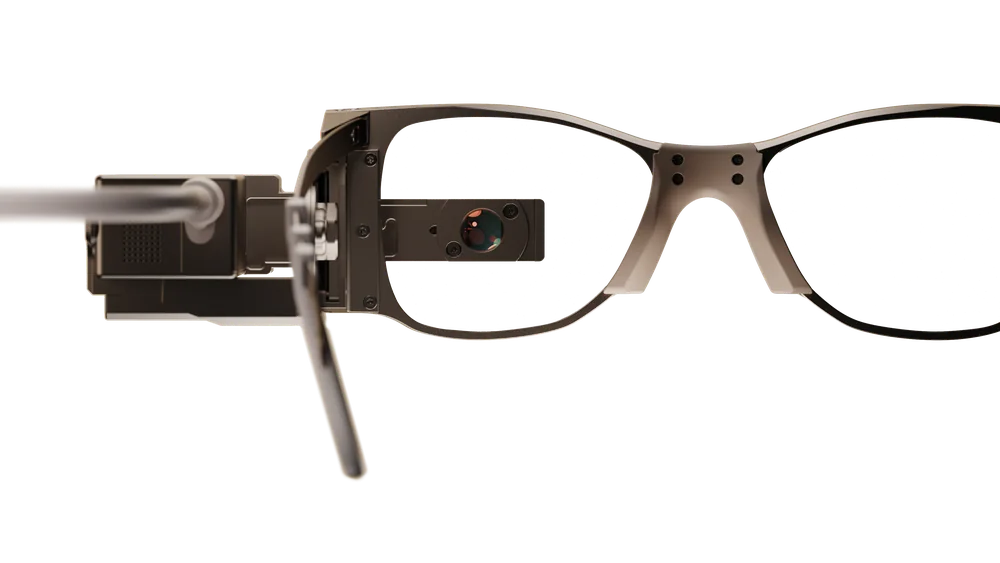
Medical systemResearch evidence briefPrice not verifiedPRIMA combines an implanted retinal component with an external visual-processing system that includes glasses. That makes it relevant here for a specific reason: the wearable is part of a larger clinical pathway, rather than an ordinary pair of smart glasses with a medical-sounding feature. The underlying objective is limited visual function for appropriately selected patients, not unrestricted restoration of normal sight.
The original patient manual explains the relationship between the implant, projection glasses and pocket processor, including patient-specific setup and rehabilitation. It also describes the system as complementary to other mobility aids. This older investigation-era manual is useful for understanding operation, but should not be used by itself to establish current approval or availability in a particular country.
Its place in this selection comes from the way several technologies must work together around a person's residual visual system. A successful device concept is not enough: fitting, training, support and the patient's condition shape the practical result. We therefore discuss PRIMA as a specialist medical system with a documented architecture. Anyone evaluating access needs current clinical information for the relevant indication and jurisdiction; the ranking is an explanation of the technology, not an assessment of individual suitability.
Why #6Sixth for demonstrating how wearable optics can participate in a specialist implant system. It is not directly comparable with a consumer display, and the rank does not express clinical effectiveness.
The compromiseImplantation, patient selection and rehabilitation are essential. The historical manual is not a current regulatory register, and improved function should not be described as normal vision restored.
Release date not verifiedResearch or specialist clinical accessCatalogue status: Medical system. A research publication or demonstration is not a retail release.Evidence and original sources
Research or specialist medical evidence brief. This is not a consumer hands-on review or a treatment recommendation.
 07First rankingExploring wearable smell in virtual reality
CityU skin-interfaced olfactory interface
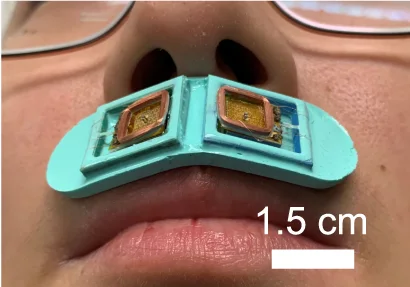
Research prototypeResearch evidence briefPrice not verifiedCityU's olfactory-interface research asks how virtual experiences might deliver more than images and sound. The work describes compact scent-generating units in skin-interfaced and mask-style arrangements. Heating scent-containing material provides a way to trigger a smell near the user, making the physical delivery mechanism part of the experience rather than leaving it to an external room diffuser.
The original research record is valuable because it identifies an actual device architecture and experimental work. The two configurations should not be collapsed into a claim that one tiny patch produces any imaginable smell. A finite set of odours, placement near the nose and control of release are central to what the prototype demonstrates.
We include it as an instructive sensory-interface project. It shows why adding another sense to VR involves consumables, timing and clearing a previous stimulus, not merely installing an app. The practical questions for a future wearable include comfort, repeatability, replenishment and how one user's sensitivity differs from another's. Its seventh-place position reflects interesting demonstrated engineering with a narrower and less mature everyday use case than the earlier projects. It is research coverage, with no claim of a finished consumer scent accessory.
Why #7Seventh for a concrete extension of immersive interfaces into smell. It demonstrates a mechanism worth understanding, but everyday comfort, content support and maintainability remain more uncertain than the concept itself.
The compromiseA prototype scent generator is not an unlimited smell library. Materials, heat control, individual sensitivity and odour persistence all matter, and consumer readiness is not established.
Release date not verifiedResearch or specialist clinical accessCatalogue status: Research prototype. A research publication or demonstration is not a retail release.Evidence and original sources
Research or specialist medical evidence brief. This is not a consumer hands-on review or a treatment recommendation.
 08First rankingPrice not verified
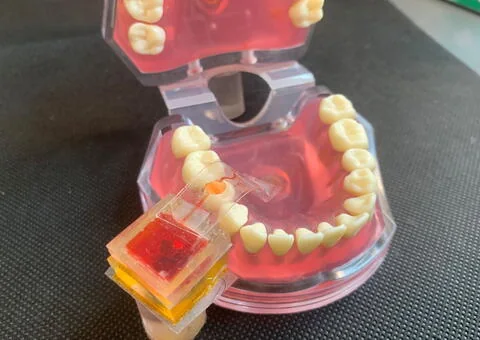
Ohio State's e-Taste research investigates how selected chemical taste information could be sensed and recreated at another location. The system combines sensing with a mouth-interfacing delivery mechanism, using controlled release rather than suggesting that a headset alone can make any food taste appear. That distinction makes the project more understandable and less sensational than a claim of complete virtual dining.
The university's original report describes work involving five basic taste qualities and experiments in remote transmission. Those demonstrations are interesting evidence of a mechanism, but the experience of eating also involves smell, texture, temperature and expectation. Reproducing selected taste cues is therefore a narrower achievement than reproducing an entire meal.
Its value in this list is as an example of the interfaces needed when digital systems meet chemical sensation. A future product would have to solve portability, cleaning, replenishment and consistent delivery as well as the electronics. The reported prototype gives researchers something concrete to evaluate; it does not yet give a consumer a routine wearable accessory. We place it after the olfactory interface because the mouth-contact delivery system adds particularly demanding practical constraints, while recognising that both projects explore meaningful gaps in current immersive media.
Why #8Eighth for a specific taste-sensing and delivery experiment. Its research interest is high, while miniaturisation and the practical burden of a mouth-contact system limit any near-term consumer interpretation.
The compromiseBasic taste cues are not a complete food experience. Hygiene, consumables, sensitivity and reliable delivery need attention, and the research demonstration is not evidence of a ready-to-buy wearable.
Release date not verifiedResearch or specialist clinical accessCatalogue status: Research prototype. A research publication or demonstration is not a retail release.Evidence and original sources
Research or specialist medical evidence brief. This is not a consumer hands-on review or a treatment recommendation.
 09First rankingFollowing the path toward integrated smart contact lenses
XPANCEO smart contact lens prototype portfolio
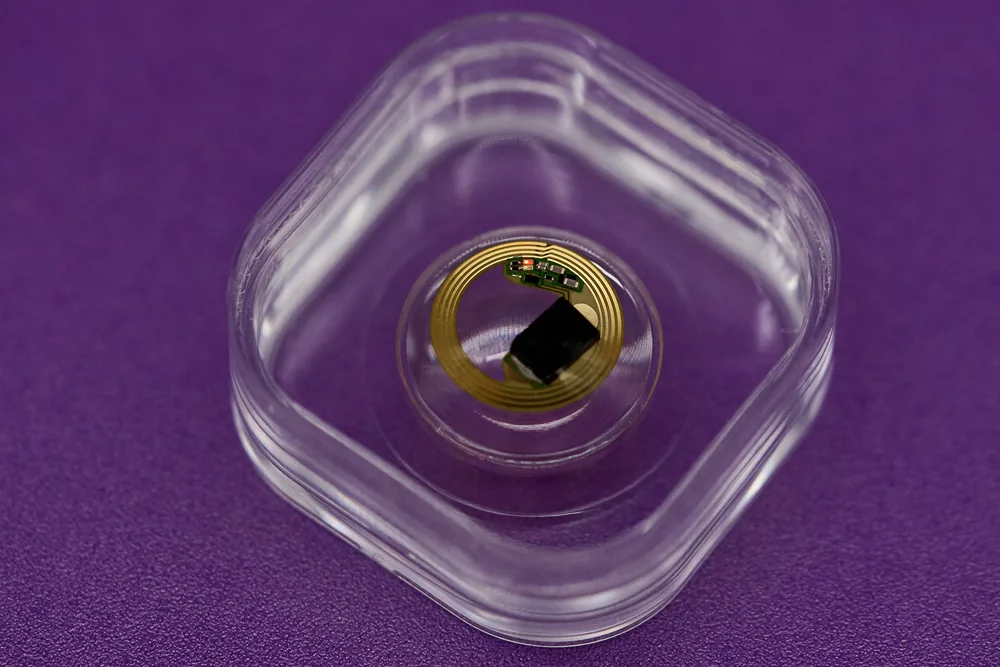
PrototypeResearch evidence briefPrice not verifiedXPANCEO's portfolio is interesting because it breaks the smart-contact-lens ambition into demonstrable components. The company's presentation covers different prototype functions related to display, power and sensing. For readers, the most useful distinction is that a portfolio of separate prototypes is not the same thing as one integrated lens that a person can wear all day.
The company's own announcement points toward a first integrated prototype demonstration in 2027. That is a development target, not a shipping date or evidence that all advertised functions already coexist in a safe, comfortable lens. Demonstrations can establish that a component works under chosen conditions while leaving packaging, energy delivery, heat and prolonged eye contact unresolved.
We include the portfolio because it helps explain where the engineering effort is going. It also deserves a lower position than projects with clearer human-use evidence: ambitious integration remains ahead. The right milestones to follow are an actually integrated system, transparent test conditions and appropriate safety evaluation. Until those exist, this entry is an analysis of a company's research direction. It does not endorse a medical claim, promise an augmented-reality replacement for glasses, or describe a consumer launch that has not been verified.
Why #9Ninth because the separate demonstrations are relevant but the integrated wearable remains a stated future milestone. The rank deliberately gives more weight to concrete human-use evidence than to the breadth of a roadmap.
The compromiseDo not combine separate prototype capabilities into a fictional finished lens. The 2027 integration goal can change, and wearability, safety, power and useful runtime remain critical unanswered product questions.
Release date not verifiedResearch or specialist clinical accessCatalogue status: Prototype. A research publication or demonstration is not a retail release.Evidence and original sources
Research or specialist medical evidence brief. This is not a consumer hands-on review or a treatment recommendation.
 10First rankingUnderstanding whole-body control of extra robotic arms
MetaLimbs
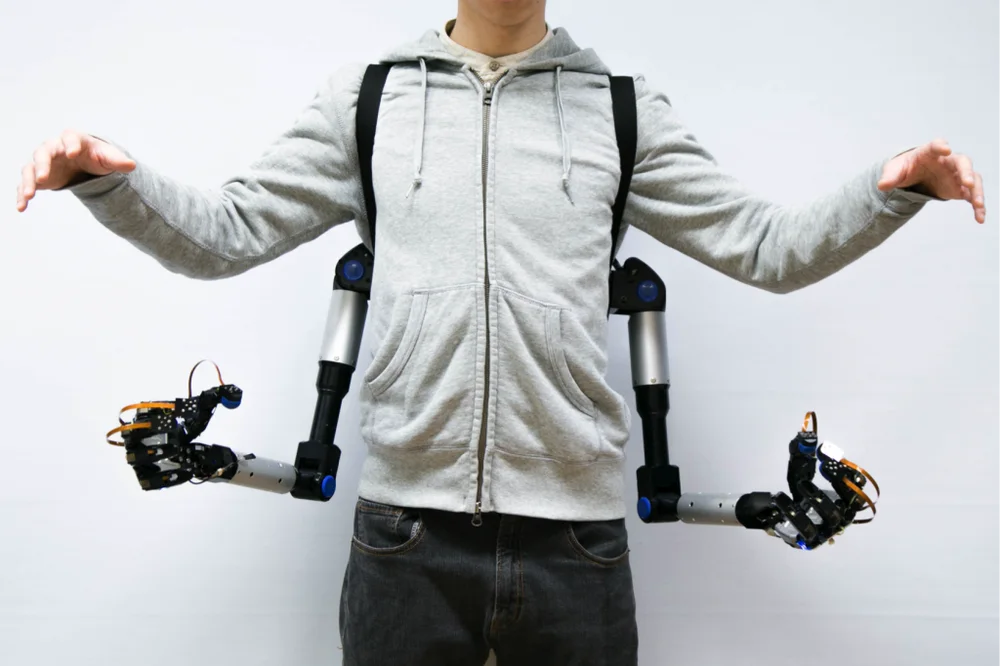
Research prototypeResearch evidence briefPrice not verifiedMetaLimbs is a research project that adds a pair of robotic arms behind the wearer and maps lower-body movement into additional manipulation. The original 2017 project material makes the concept clear: extra arms need a control strategy, and that strategy can recruit parts of the body that are not already performing the hand task.
Its interest is not that a person suddenly gains effortless extra hands. The demonstration illustrates a coordination problem as much as a hardware achievement. Moving feet or knees to influence an additional arm may make sense in a constrained setup, while competing with balance, walking or another activity in a different context. A striking video does not establish a comfortable working day.
We retain MetaLimbs as the tenth research selection because it provides historical context for contemporary augmentation claims. It helps a reader ask better questions about newer exoskeletons and extra-limb projects: what supplies the command, what task is improved, and what existing freedom is traded away? It is an older research prototype, not a current retail recommendation. Its place is educational and comparative, with no assumption that the original system has become a supported product or a proven workplace tool.
Why #10Tenth as an instructive historical research demonstration of extra-limb control. Newer projects rank above it because this source documents a 2017 prototype rather than a recently verified consumer or clinical system.
The compromiseControl demands, weight and constrained use are material concerns. The original project does not establish modern availability, routine workplace safety or independent long-term performance.
Release date not verifiedResearch or specialist clinical accessCatalogue status: Research prototype. A research publication or demonstration is not a retail release.Evidence and original sources
Research or specialist medical evidence brief. This is not a consumer hands-on review or a treatment recommendation.
Ranking history
This is the first published edition. Previous positions will appear after a real revision.
Edition 1 · Oct 13, 2026 · Current
First substantial research selection with explicit maturity, evidence and access boundaries.
How we choose and track positions
SmartWearGuide’s order is an editorial judgment from linked specifications and published testing. We have not performed house hands-on tests. We prioritise a useful daily job, fit, compatibility, complete cost, software support and the strength of the evidence. Category-specific criteria appear on each list. Lower-confidence and specialist selections are labelled; a higher rank cannot guarantee a better fit for you.
Current-product lists contain released, unrecalled models and explicitly labelled professional equipment. The Frontier & research selection is a separate research watchlist, not a shopping recommendation. Music & creative wearables explicitly separates eight released choices from two preorder or reservation projects. Best Upcoming covers announced products and early evidence. A released product is not necessarily in stock in your country. No brand pays for a place in these lists.
History begins with the first edition published here. Each substantive revision appends a dated edition and reason; past editions are preserved. Up, down and previous position compare the latest two published editions of the same list. We do not invent an earlier chart, move products to manufacture news, or turn an announcement date into a shipment date.