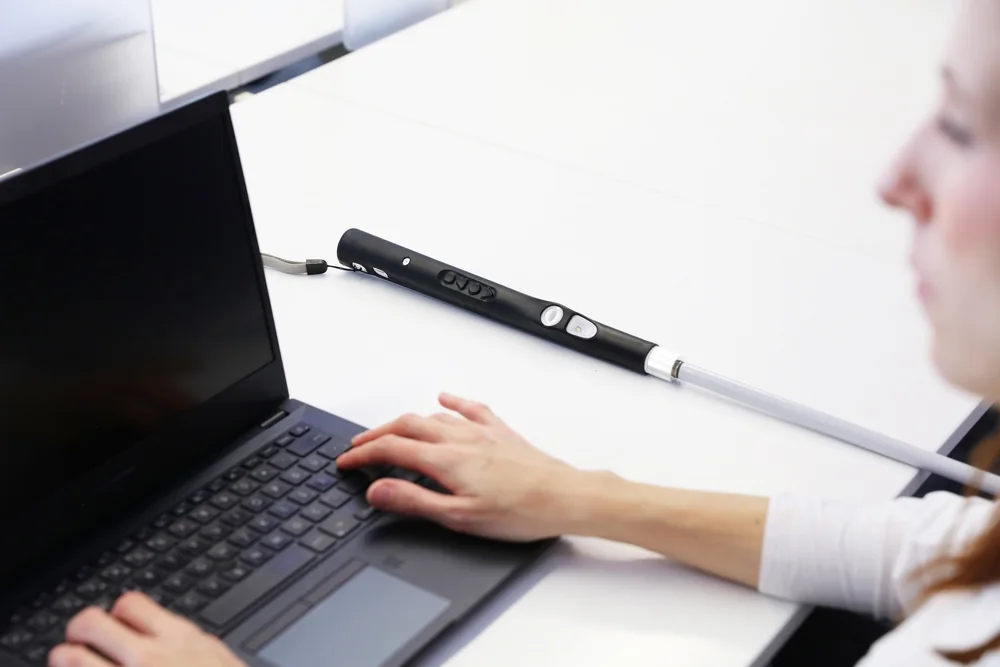
Manufacturer product photograph of feelSpace naviBelt.
Used alongside mobility aids; it does not replace a white cane.
OUR REVIEW & VERDICT
feelSpace naviBelt: Directional cues through vibration around the waist
An original synthesis of the linked evidence. SmartWearGuide has not hands-on tested this device.
naviBelt offers an alternative channel for navigation: direction is indicated through vibration around the waist rather than requiring continuous spoken instructions. Sixteen vibration units cover the full circle, and a north-indication mode provides an orientation reference. Its attraction is keeping directional information separate from the hands and ears.
The manufacturer documents Bluetooth connection to the feelSpace app on supported phones and tactile controls on the belt. Those features make it a specific orientation accessory, not a general obstacle detector. The distinction is important: knowing the intended direction does not establish that the path in that direction is clear or safe.
Choose it through a practical trial involving familiar routes and the user's existing mobility tools. Learning the vibration vocabulary and assessing belt comfort are part of the purchase. We have not independently measured navigation performance or compared it with audio directions. The shortlist position recognises a distinctive information channel that some users may find less intrusive, while others may prefer a phone or spoken guidance. The value is in how well it fits the individual routine, not in a universal claim that haptic navigation is superior.
Why #3 in this selectionThird for its hands-free, non-audio directional channel. It complements rather than replaces other mobility tools, and should be assessed on that basis.
The compromiseIt indicates direction rather than detecting every obstacle. Phone support, training time and tolerance for waist vibration determine whether it is useful.


Start the conversation.
No comments yet. Your experience could help the next person choose.