
Our Top 10 music & creative wearables
Eight released practice, performance and listening tools, followed by two clearly labelled previews.
Browse & filter Categories, features & sorting
How price order works
Lowest recorded store prices take priority over announced or launch prices, within the selected source market. Currencies use the dated EUR reference rates. Deposits and recurring charges are excluded from price order; missing prices stay last. Original price records remain visible.
8 released choices · 2 previews
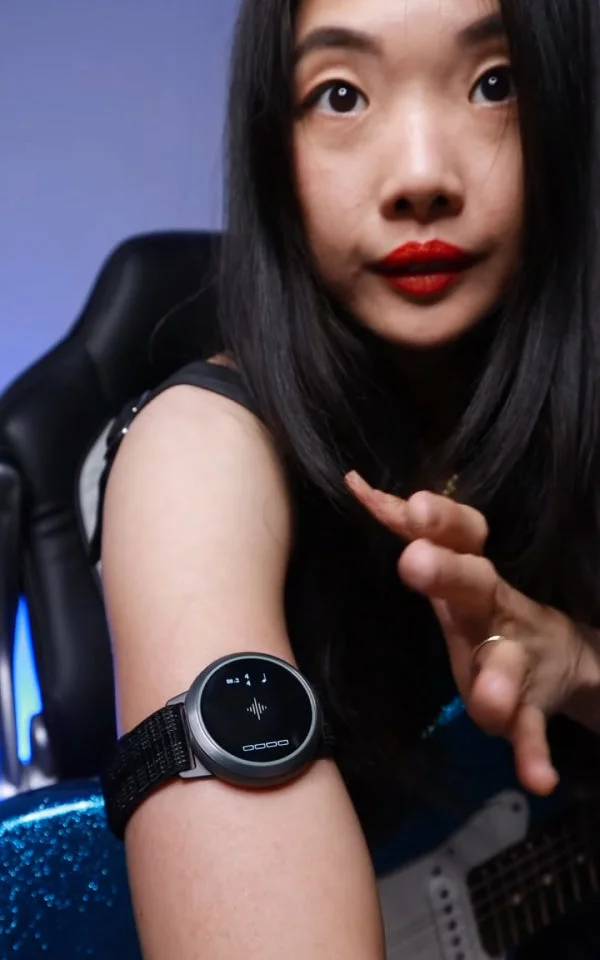 01First ranking$195 USD≈ €174 EURECB 2026-10-12US · Store price · Stock and delivery not verifiedPrice checked 2026-10-12
Core 2 makes the strongest case when a musician wants several practice tools on the body. Its vibrating metronome leaves the ears available for the instrument, while the tuner, practice tracking and stored tempos reduce the need to move between separate tools. That combination is why it leads this use-case selection. It is a practice aid with a specific musical purpose, rather than a replacement for a general smartwatch.
Drummer Brendan Jones found the controls approachable and reported roughly three-and-a-half to four hours of continuous vibration. His useful qualification was that rehearsed setlists suit it better than spontaneous tempo changes, and the physical vibration of drumming can make the pulse less obvious. His review includes a discount relationship, so it should be read alongside less enthusiastic owner reports. Sweetwater owners describe app-dependent setlist navigation and inconsistent satisfaction with battery life.
The practical decision is whether feeling time helps your playing. Core 2 earns its extra complexity if you also use the tuner and practice log. Pulse is the simpler option for someone who wants only a beat, while Peterson suits players already using a dedicated metronome. A trial during your actual instrument practice is more informative than a long feature list.
Why #1First for its broad practice workflow: tactile timing, tuning and practice tracking in one wearable. The position does not imply unanimous reviewer approval or superior timing accuracy measured by this guide.
The compromiseThe benefits depend on feeling the pulse clearly. Active vibration drains the battery much faster than watch use; live setlist changes may still require the phone, and owner satisfaction is mixed.
Release date not verifiedExact model; availability varies by marketCatalogued as released; exact initial retail release date is not verified.Evidence and original sources
Named firsthand review with affiliate relationship, owner counter-evidence and manufacturer specifications.
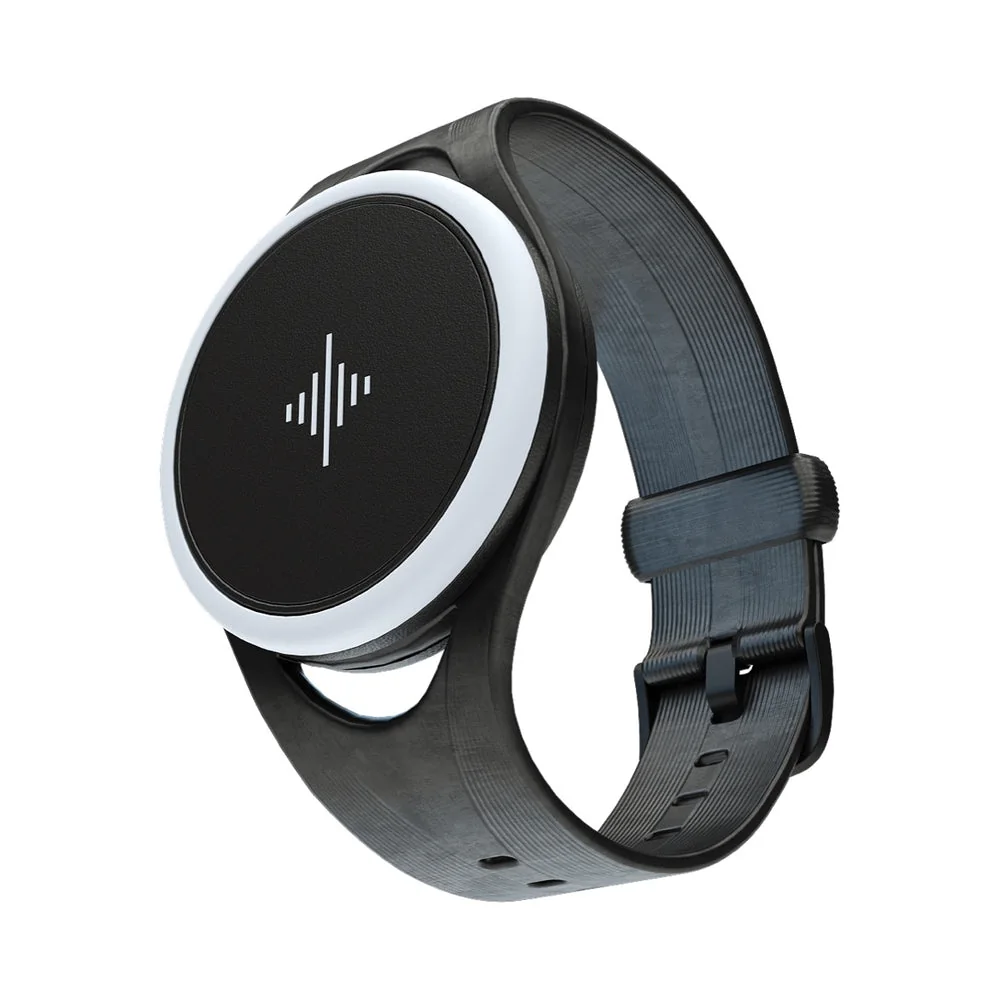 02First ranking$119 USD≈ €106 EURECB 2026-10-12US / USD official store · Store price · In stock in official structured offerPrice checked 2026-10-12
Pulse is the more focused Soundbrenner choice: its job is to put a beat on your body. A rotating control and tap-based operation provide a direct interface, while wrist, arm or ankle placement gives a musician alternatives when one location is distracting. The official specification covers tempos from 20 to 400 BPM and synchronisation for up to five devices, making it relevant to individual practice and small ensembles.
Its advantage over Core 2 is simplicity. A guitarist working on an even picking pattern or a pianist isolating a difficult passage may want a silent rhythmic cue without also managing a tuner, notifications or practice statistics. The manufacturer rates continuous playback above six hours, but this is a published specification, not a runtime independently measured for this guide.
A haptic beat still requires learning. Strong movement, strap fit and where the device contacts the body can change how clearly the pulse is perceived. We would choose Pulse when tactile timing itself is the goal, and Core 2 when the additional practice tools will actually be used. The evidence assembled here establishes the design and workflow; it does not establish that vibration improves every musician's timing more than an audible click.
Why #2Second because it addresses the core practice job with fewer distractions than Core 2. It gives up the broader watch toolkit but remains more self-contained than a clip that requires an external metronome.
The compromiseBody placement and tactile preference matter. App and ensemble synchronisation should be checked with your own setup; manufacturer battery and strength claims are not comparative test results.
Release date not verifiedExact model; availability varies by marketCatalogued as released; exact initial retail release date is not verified.Evidence and original sources
Manufacturer documentation; editorial assessment, not an independent wearing test.
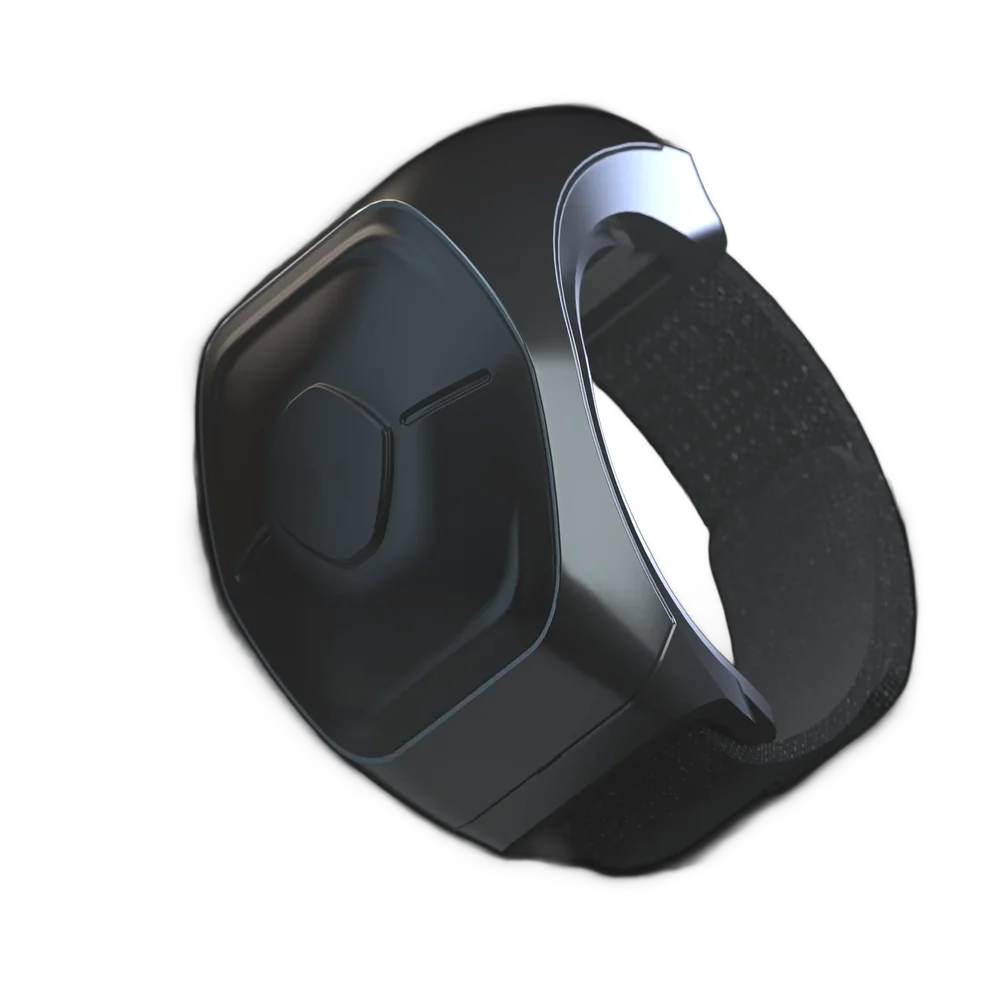 03First ranking$349 USD≈ €312 EURECB 2026-10-12International official store · Store price · Not verifiedPrice checked 2026-10-12
Wave offers a different kind of musical value: it turns a finger-worn controller into an expressive input for sound. A small movement can be mapped to a filter, effect or software command, so the hand becomes part of the performance rather than repeatedly returning to a mouse. The benefit is especially clear for electronic musicians who already understand MIDI mapping and want a physical way to shape a phrase.
Tom Cameron's original Happy hands-on found Softwave straightforward to get started with and described gesture mapping as creatively rewarding. That report covered tilt, pan, roll, vibrato, tap and button commands. It is also careful about its limit: live-stage use was imagined, not road-tested. The 2020 review supports the interaction concept, while the current Genki documentation is the reference for present purchasing and setup; its old price should not be treated as today's offer.
We would put Wave on a shortlist for a producer who can name the parameter they want to control before buying it. It is less persuasive as a gadget bought in the hope that it will automatically improve a performance. Mapping, rehearsing deliberate gestures and avoiding unintended movements are part of using the instrument, just as learning a pedal or controller is.
Why #3Third for offering a genuinely different creative control surface with firsthand evidence behind the interaction. It is more specialised than the two practice metronomes and depends on a compatible software workflow.
The compromiseIt requires mapping and rehearsal. The cited hands-on did not verify reliability on stage, and an older positive review cannot confirm compatibility with every current computer, DAW or plug-in.
Release date not verifiedExact model; availability varies by marketCatalogued as released; exact initial retail release date is not verified.Evidence and original sources
Named original hands-on, dated 2020, plus current manufacturer documentation; no current stage reliability test.
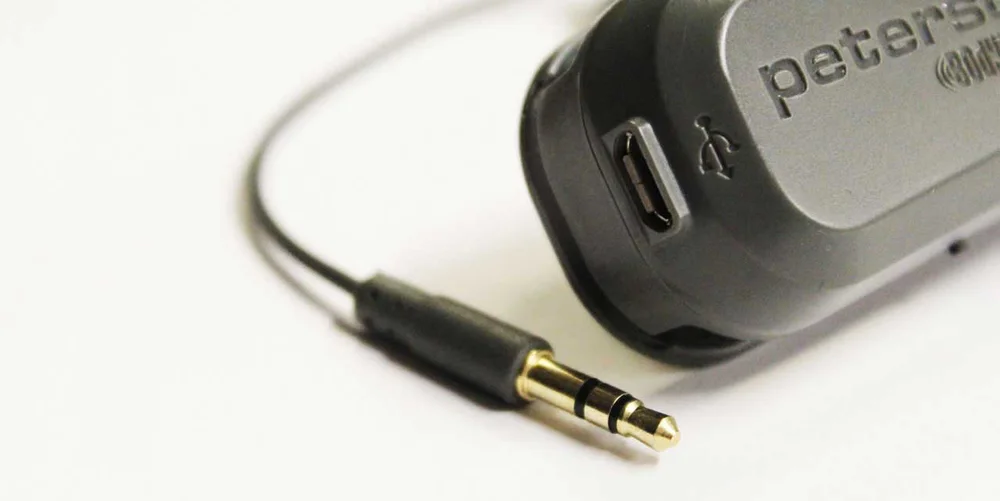 04First rankingAdding a tactile beat to an existing metronome
Peterson Body Beat Pulse Solo
ReleasedSpecifications-led selection$29.99 USD≈ €27 EURECB 2026-10-12US · Store price · Stock and delivery not verifiedPrice checked 2026-10-13Body Beat Pulse Solo is appealing because it solves a narrow problem without asking you to replace the rest of your practice setup. It accepts a metronome's audio output through a 3.5 mm connection and turns the pulse into vibration at a body clip. For a player who already likes a metronome or compatible app, that makes it an accessory to a familiar workflow.
The clip format is the meaningful distinction from a wristwatch. You can try a contact point that lets you feel the beat without occupying the wrist, while the rechargeable design avoids treating every practice session as a disposable-battery task. Peterson also documents accented feedback with its app. These are manufacturer-described capabilities, not a comparative verdict that this clip feels stronger or more precise than Soundbrenner.
Its value is strongest in a controlled practice environment where the cable and source device have a sensible place. A musician expecting a completely independent wearable will be disappointed: the upstream metronome remains part of the system. Our recommendation is therefore practical and conditional. Keep the timing source you trust, add tactile feedback if it helps, and check connector compatibility before assuming a modern phone will plug straight in.
Why #4Fourth for extending an existing metronome instead of duplicating its controls. It is less self-contained than Pulse or Core 2, but potentially a better fit for players already committed to another timing source.
The compromiseIt needs an external audio beat and a cable. Phones without an appropriate audio output need a compatible adapter; neither subjective pulse visibility nor instrument-specific comfort was independently established here.
Release date not verifiedExact model; availability varies by marketCatalogued as released; exact initial retail release date is not verified.Evidence and original sources
Manufacturer documentation; editorial assessment, not an independent wearing test.
 05First rankingStructured ensemble rehearsal and tempo maps
Peterson Body Beat Sync BBS-1
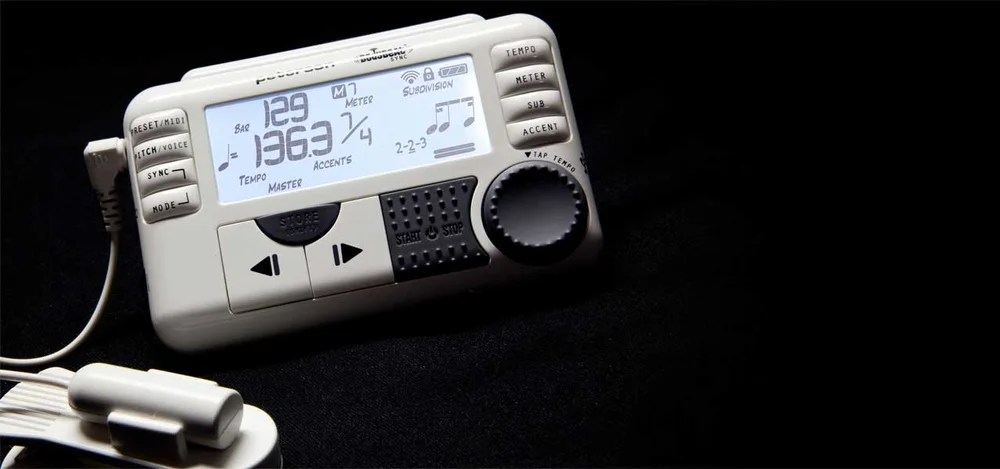
ReleasedSpecifications-led selection$155 USD≈ €139 EURECB 2026-10-12US · Store price · Stock and delivery not verifiedPrice checked 2026-10-12Body Beat Sync BBS-1 is for a more organised rehearsal system than a simple wrist pulse. Peterson combines a dedicated metronome with a Vibe Clip, stored presets and wireless synchronisation between compatible units. The useful idea is that players can receive a shared timing reference without putting an audible click into the room or every player's headphones.
Its documented tempo-map and MIDI-related workflow gives it a role in arrangements with planned changes. A teacher, bandleader or percussion group can think in terms of rehearsed sequences rather than repeatedly tapping a new tempo. This is a capability assessment from Peterson's product information and manual. It is not evidence that this guide has measured wireless timing alignment across a stage.
The extra hardware makes sense only if those structured features solve a real problem. Someone practising scales alone may find a simpler Pulse easier to live with. Someone preparing repeatable arrangements may value a dedicated control unit more than smartwatch styling. Before building an ensemble around it, confirm the exact units, accessories and connection method the whole group will use. Its specialist appeal comes from coordination and preparation, not from being the smallest wearable in the list.
Why #5Fifth because ensemble synchronisation and planned tempo changes are useful specialist strengths. Simpler personal practice tools rank above it for a wider audience; its extra system complexity needs a clear musical reason.
The compromiseBudget for the complete setup and compatible units, not only the body clip. The available sources explain features but do not provide a current independent multi-user timing or durability test.
Release date not verifiedExact model; availability varies by marketCatalogued as released; exact initial retail release date is not verified.Evidence and original sources
Manufacturer documentation; editorial assessment, not an independent wearing test.
 06First rankingA smaller practice companion for young musicians
Soundbrenner Spark
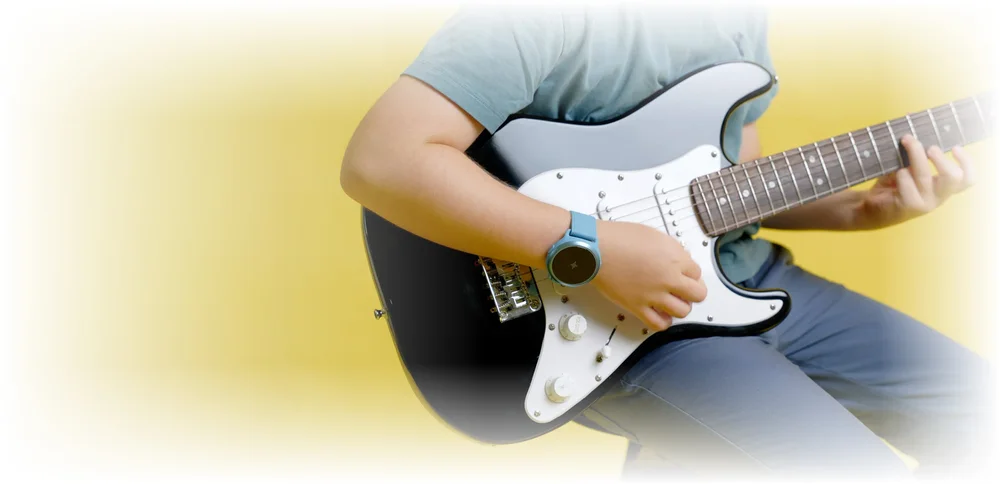
ReleasedSpecifications-led selection$169 USD≈ €151 EURECB 2026-10-12US · Store price · Stock and delivery not verifiedPrice checked 2026-10-13Spark adapts the tactile-practice idea to a smaller, habit-focused device. Soundbrenner describes a lightweight wearable with a vibrating metronome, practice goals and streaks. The point is to make starting and keeping track of practice less abstract, particularly for a younger musician who benefits from a visible routine.
The distinction from Core 2 is audience and fit, not proof of better musicianship. The published strap range is important for a small wrist, and the manufacturer's specification separates ordinary use from the shorter runtime with active vibration. A practice timer can help a family see whether a session happened, but it cannot establish whether a passage was played attentively or whether technique improved.
We would choose Spark when its physical size and simpler practice framing fit the learner better than an adult-oriented device. A teacher can turn the logged session into a conversation about what was practised rather than a contest over minutes. The missing evidence is a convincing independent long-term test of this exact model with young players. Consequently, its place here is based on a specific design fit and documented functions, without claiming educational outcomes or universal comfort.
Why #6Sixth as the most clearly youth-oriented practice option. It is narrower than Core 2 and Pulse, but deserves a place when fit and a manageable practice routine matter more than an extensive feature set.
The compromiseCheck wrist size and whether the learner actually likes tactile cues. Streaks measure attendance rather than musical progress, and exact-model independent long-term evidence remains limited.
Release date not verifiedExact model; availability varies by marketCatalogued as released; exact initial retail release date is not verified.Evidence and original sources
Manufacturer documentation; editorial assessment, not an independent wearing test.
 07First ranking$407 USD≈ €364 EURECB 2026-10-12US / USD official store · Store price · In stock on official pagePrice checked 2026-10-12
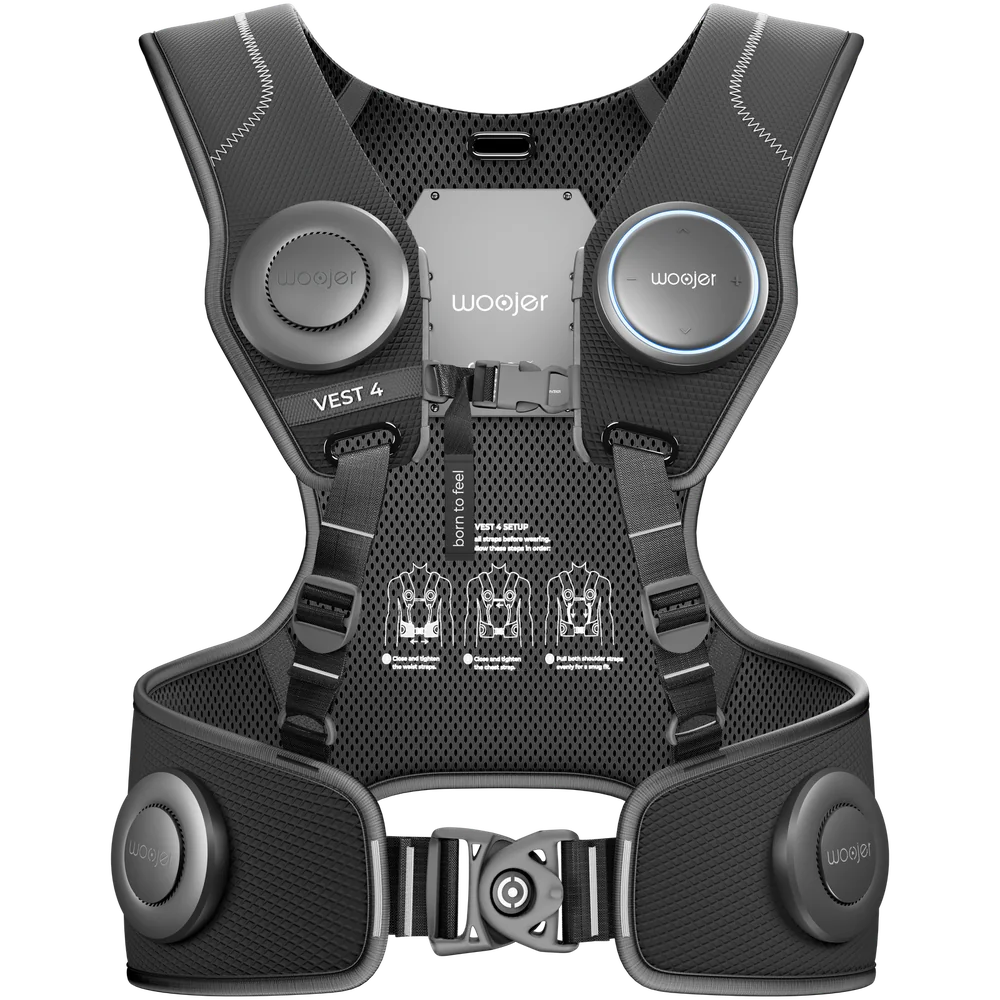
Vest 4 adds a physical layer to listening by converting audio into vibration across the torso. Its six transducers make it a fuller-body proposition than a single-point strap. That is its main appeal for a listener who wants to feel bass and rhythmic impact while using headphones, or for a creator exploring how a mix translates into tactile sensation.
Dom Leighton's TheSixthAxis review found the newer vest more breathable and less cumbersome than its predecessor, and described convincing physical impact from audio. The review also identified the practical friction: extra connections and equipment can interrupt an otherwise simple listening setup. Its response follows the sound; that should not be confused with software-authored feedback that independently knows exactly where a game event happened.
For music, the question is whether the added sensation is enjoyable and useful enough to justify wearing a vest. It is not a substitute for monitoring the audible mix, and its frequency claims are not a guarantee of a flat mastering reference. We place it below the practice and performance controllers because its value is more experiential, but above the smaller strap when immersion is the main objective and bulk is acceptable.
Why #7Seventh for immersive listening with exact-model firsthand coverage. The vest offers broader body contact than Strap 4, but a practice tool or expressive controller is more directly useful to most working musicians.
The compromiseBulk, cables and the additional setup remain meaningful costs. Audio-reactive vibration is not precise spatial feedback or proof that a mix is balanced, and personal tolerance for strong haptics varies.
Release date not verifiedExact model; availability varies by marketCatalogued as released; exact initial retail release date is not verified.Evidence and original sources
Named independent exact-model review and manufacturer specifications; subjective immersion, not a calibrated studio-monitor test.
 08First ranking$143 USD≈ €128 EURECB 2026-10-12US / USD official store · Store price · In stock on official pagePrice checked 2026-10-12
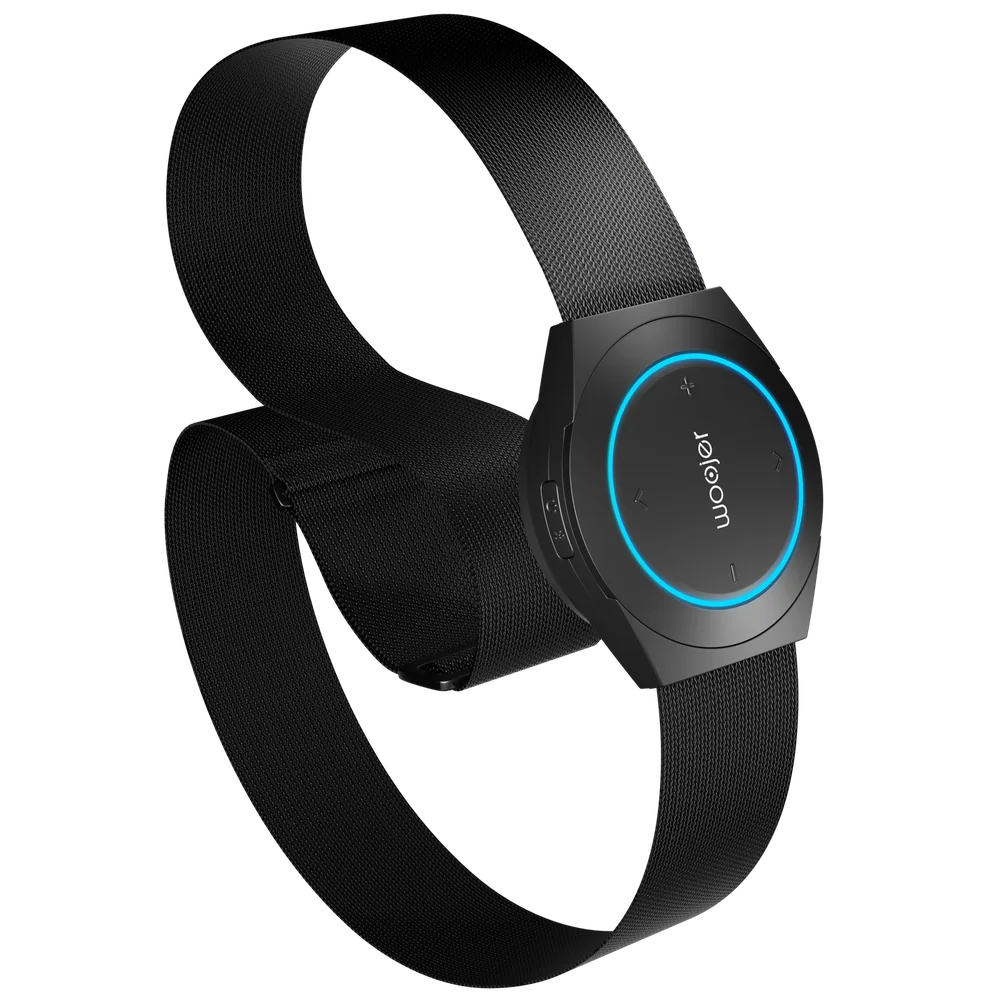
Strap 4 takes the audio-to-vibration idea and makes the physical commitment smaller. Its single contact point can be worn around the waist or chest, giving a listener a way to add tactile bass without putting on a full vest. The documented independent audio and haptic controls matter because more vibration is not always the same thing as a more comfortable listening experience.
Compared with Vest 4, the gain is portability and the loss is distribution across the body. That trade can be sensible at a desk, while moving between rooms, or for someone who simply wants to find out whether tactile listening appeals to them. Woojer publishes a roughly 240 g device weight and an up-to-ten-hour battery claim; those figures describe the product and should not be mistaken for this guide's measurements.
We would choose the strap for convenience rather than expecting it to reproduce the coverage of six vest transducers. Exact-model independent evidence assembled for this entry is thinner than for Vest 4, so the recommendation is provisional. Avoid importing praise from a previous Strap generation or medical interpretations of relaxation marketing. The useful, supported proposition is straightforward: a compact wearable adds a controllable physical response to compatible audio.
Why #8Eighth for a lower-bulk approach to tactile listening. It follows Vest 4 because the latter has broader body coverage and stronger exact-model review evidence, while the strap wins when portability is the priority.
The compromiseOne contact point cannot recreate a vest distribution. Connection choices and fit need checking with your audio source, and manufacturer runtime claims have not been independently confirmed in this review.
Release date not verifiedExact model; availability varies by marketCatalogued as released; exact initial retail release date is not verified.Evidence and original sources
Manufacturer documentation; editorial assessment, not an independent wearing test.
 09First rankingPreview: expressive whole-hand performance
MiMU Gloves (2026 design)
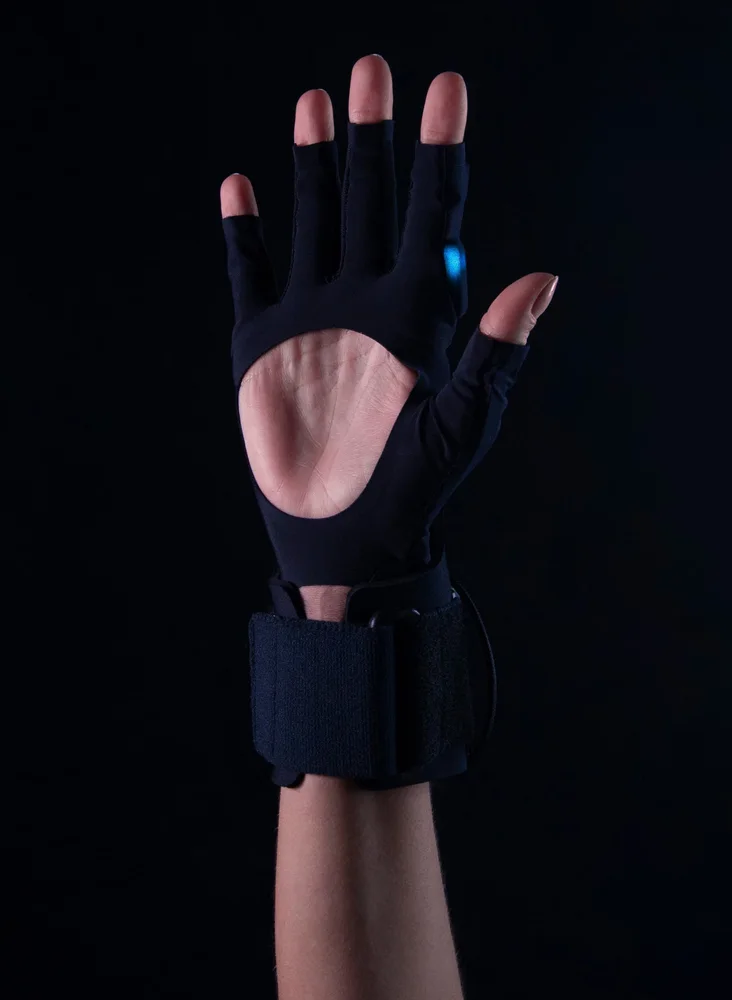
Pre-orderSpecifications-led selection€2,699 EUR≈ $3,018 USDECB 2026-10-12EU · Store price · Stock and delivery not verifiedPrice checked 2026-10-12MiMU's 2026 Gloves are an unusually ambitious way to turn body movement into musical control. Finger flex and hand orientation feed a configurable performance system through Glover, with MIDI and OSC allowing those gestures to interact with compatible software. Open fingertips are a practical design choice for a performer who still needs touch and dexterity during a set.
The attraction is continuity between movement and sound: a rehearsed gesture can change an effect or shape a musical phrase while the performer remains visibly engaged with the audience. That is also why the gloves are not a shortcut. A convincing performance needs mapping decisions, calibration and practice so that ordinary hand movement does not accidentally become a musical command.
This exact 2026 design remains a pre-order entry in the catalogue. The current manufacturer page explains the design, computer requirements and wireless approach, but evidence about earlier MiMU work cannot validate the durability, latency or comfort of every new pair. We include it as a clearly labelled preview after the eight released choices. It belongs on the radar of an artist with a specific gestural concept, rather than on a buy-now list for someone who needs a verified touring tool immediately.
Why #9Ninth as a pre-order preview after the released choices. Its expressive scope is substantial, but the current edition lacks the purchase certainty and exact-model field evidence required to place it among available recommendations.
The compromisePre-order status matters. Verify delivery terms, the required Glover/computer setup and rehearsal time; earlier glove performances do not prove the new design reliability.
Release date not verifiedExact model; availability varies by marketCatalogue status: Pre-order. This is not a confirmed retail shipping date.Evidence and original sources
Manufacturer documentation; editorial assessment, not an independent wearing test.
 10First ranking$699 USD≈ €625 EURECB 2026-10-12US · Store price · Sold out on manufacturer store at check timePrice checked 2026-10-12
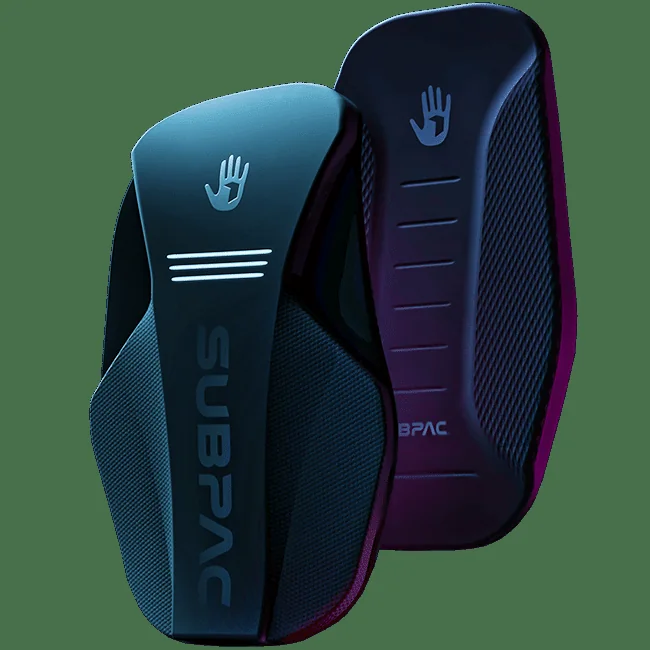
SUBPAC X1 is aimed at making low-frequency content physically perceptible through a pad that can be worn or used against a chair. For a producer working on headphones, that is an interesting proposition: it adds a bodily reference for bass that ordinary small speakers or headphones may not provide in the same way.
The official design information describes wired and wireless input options, with a separate C1 component involved in some of the broader system's connectivity. That distinction matters when comparing the price of one item with the cost of the desired studio setup. The stated frequency range describes intended response; it does not establish a calibrated, room-independent replacement for checking a mix on other playback systems.
The decisive limitation is availability. This catalogue records X1 as Reservation, not as a confirmed shipped retail model. Earlier SUBPAC products and demonstrations help explain the concept but do not prove that the reserved X1 matches promised battery life, latency or long-term support. It therefore closes the list as a preview. A producer who can wait may want to follow shipping evidence and independent measurements; someone who needs equipment for a current project should prioritise a released alternative with a clear return path.
Why #10Tenth because the studio use case is compelling but the catalogue still records a reservation. It is a watch item after the eight released products and MiMU pre-order, not a claim of immediate availability.
The compromiseReservation is not delivery. Confirm the complete hardware bundle and independently verified shipping before committing to a project schedule; promised response and runtime are not measured performance here.
Release date not verifiedExact model; availability varies by marketCatalogue status: Reservation. This is not a confirmed retail shipping date.Evidence and original sources
Manufacturer documentation; editorial assessment, not an independent wearing test.
Ranking history
This is the first published edition. Previous positions will appear after a real revision.
Edition 1 · Oct 13, 2026 · Current
First full editorial selection with substantive sourced assessments; availability and evidence gaps remain explicit.
How we choose and track positions
SmartWearGuide’s order is an editorial judgment from linked specifications and published testing. We have not performed house hands-on tests. We prioritise a useful daily job, fit, compatibility, complete cost, software support and the strength of the evidence. Category-specific criteria appear on each list. Lower-confidence and specialist selections are labelled; a higher rank cannot guarantee a better fit for you.
Current-product lists contain released, unrecalled models and explicitly labelled professional equipment. The Frontier & research selection is a separate research watchlist, not a shopping recommendation. Music & creative wearables explicitly separates eight released choices from two preorder or reservation projects. Best Upcoming covers announced products and early evidence. A released product is not necessarily in stock in your country. No brand pays for a place in these lists.
History begins with the first edition published here. Each substantive revision appends a dated edition and reason; past editions are preserved. Up, down and previous position compare the latest two published editions of the same list. We do not invent an earlier chart, move products to manufacture news, or turn an announcement date into a shipment date.