
Our Top 10 Thermal wearables
Ten task-specific selections in a provisional editorial order, with review evidence and gaps explained.
Browse & filter Categories, features & sorting
How price order works
Lowest recorded store prices take priority over announced or launch prices, within the selected source market. Currencies use the dated EUR reference rates. Deposits and recurring charges are excluded from price order; missing prices stay last. Original price records remain visible.
10 current selections
 01First ranking$259.99 USD≈ €232 EURECB 2026-10-13US · Store price · ListedPrice checked 2026-10-12
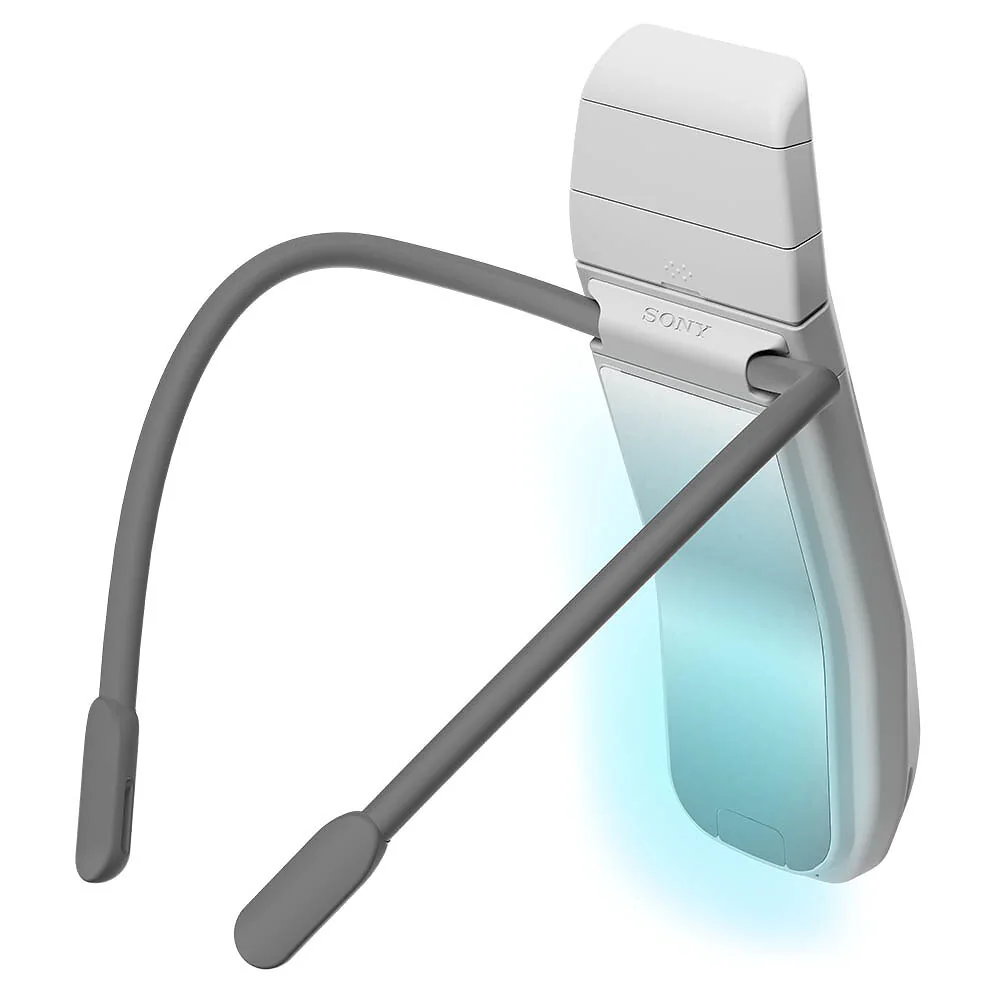
REON POCKET Pro Plus has a clear advantage for someone who dislikes holding a fan: the thermal module sits at the upper back, leaving the hands free. It heats or cools a contact surface rather than refrigerating the air around the entire wearer. That makes it a personal comfort tool with a specific sensation, not portable room air conditioning.
The documented sensing kit includes the neckband and TAG 2, with automatic modes informed by ambient conditions. Tom's Guide's exact-model review found the app convenient and the device easy to get used to, while noting that the rear buttons were awkward to reach. The reviewer also observed faster battery drain at stronger settings.
It is most convincing for commuting or seated work where a stable contact point is practical. Check the kit number and regional app support, especially when comparing imported offers. We do not use the review's battery figure as a universal specification because the manufacturer's mode-specific claim differs. The primary US product page blocked this fresh fetch; the supporting review and existing manufacturer kit evidence remain linked. A personal trial is the best way to establish whether local cooling feels sufficient for the price.
Why #1First for an unobtrusive contact-cooling design and exact-model practical reporting. Its lead concerns daily comfort, not whole-body temperature control or heat-stress protection.
The compromiseFit and skin contact determine the sensation. Strong settings shorten endurance, and the device does not replace appropriate responses to dangerously hot conditions.
Release date not verifiedFirst retail releaseA released catalogue product or explicitly labelled professional offering; exact first retail date was not established in this review pass.Evidence and original sources
Manufacturer documentation plus attributed original review evidence. No SmartWearGuide hands-on test; reviewer experience is not a universal result.
 02First ranking$299 USD≈ €267 EURECB 2026-10-13US · Store price · Availability conflictingPrice checked 2026-10-12
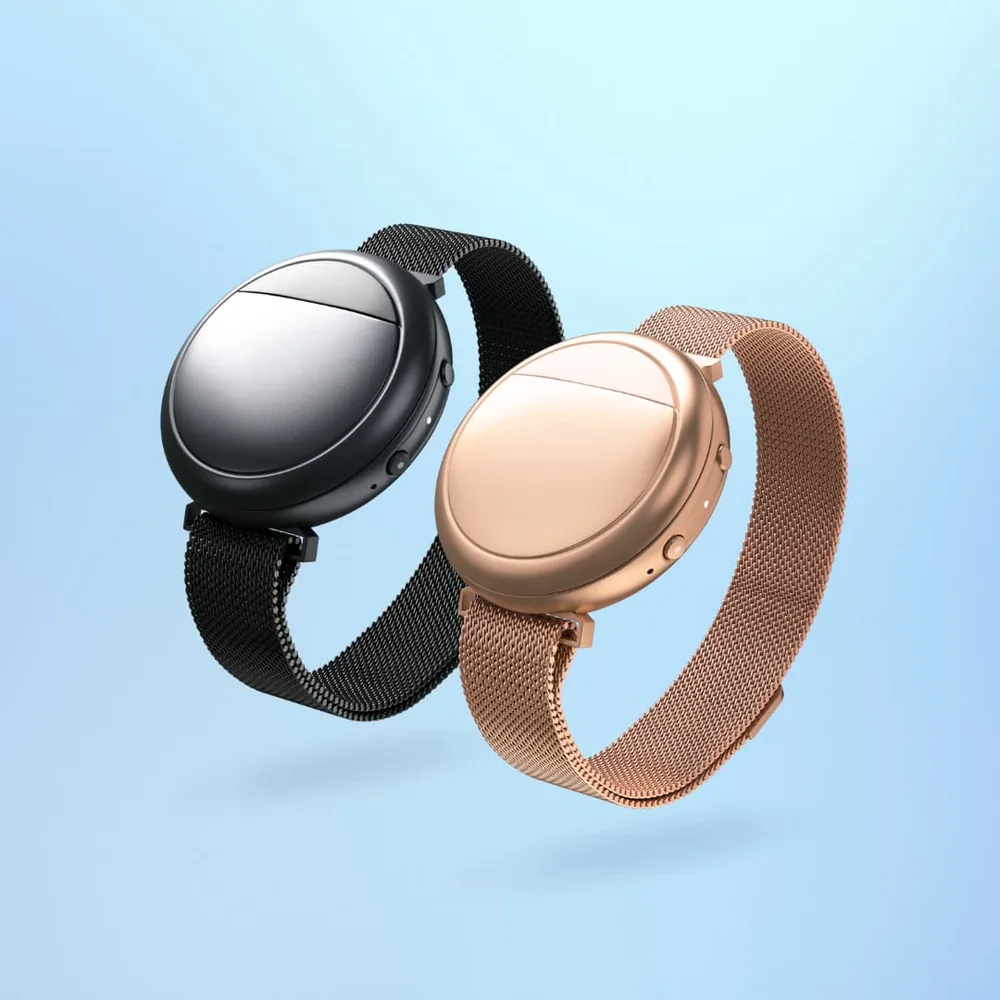
Embr Wave 2 concentrates thermal sensation at the wrist. Its attraction is discretion: no neck collar, moving fan air or bulky jacket is needed. The device is intended to change how warmth or coolness feels locally, which is a different proposition from lowering room temperature or actively cooling the entire body.
Angela Lashbrook and two other Consumer Reports evaluators tried it for two weeks in the context of hot flashes and night sweats. That is useful firsthand exposure, but a small personal-use exercise cannot establish treatment efficacy. Their article also highlighted the limits of the available placebo-controlled evidence at the time of publication.
The manufacturer documents adjustable thermal sessions, Bluetooth app control and a usage-dependent battery figure above nine hours. Consider whether a quiet wrist sensation is the benefit you want, and check the trial or return terms because perceived relief varies. We do not infer a medical outcome from the technology or from owner enthusiasm. Its high place reflects a distinctive, relatively unobtrusive comfort format. Someone seeking a breeze or large-area heat transfer should choose a different type of thermal wearable.
Why #2Second for quiet, compact comfort that differs meaningfully from neck fans. It is a personal-preference choice rather than a medically ranked treatment.
The compromiseLocal sensation may not produce the relief a buyer expects. It is not a substitute for assessing persistent symptoms, and subjective benefit should be tested within the return period.
Release date not verifiedFirst retail releaseA released catalogue product or explicitly labelled professional offering; exact first retail date was not established in this review pass.Evidence and original sources
Manufacturer documentation plus attributed original review evidence. No SmartWearGuide hands-on test; reviewer experience is not a universal result.
 03First rankingA foldable collar combining airflow and contact cooling
TORRAS COOLiFY Cyber Fold (2026)
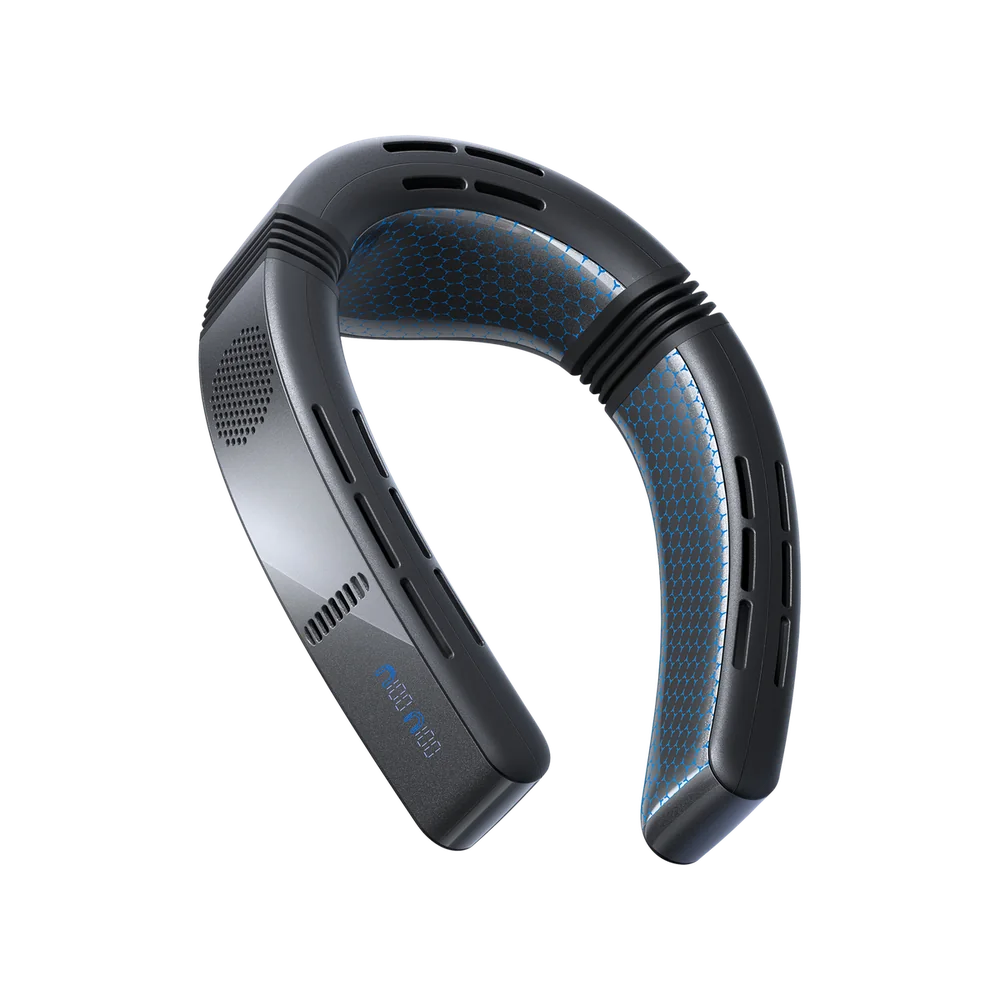
ReleasedSpecifications-led selection$279 USD≈ €249 EURECB 2026-10-13US · Store price · Out of stockPrice checked 2026-10-12Cyber Fold combines two sensations: air moving around the neck and thermoelectric cooling where the device touches the skin. The foldable design is its practical differentiator, helping a substantial collar fit into a bag when it is not being worn. That matters because portability includes storage, not just the ability to operate without a cable.
The documented 2026 model has a 6,000 mAh battery, adjustable outlets and a 530 g weight. Its maximum 15.5-hour runtime is mode-dependent. It should not be read as a promise of an entire day at the strongest cooling setting, and fan operation alone is not equivalent to using the thermoelectric modules.
This is a manufacturer-backed selection without a freshly established independent performance test. Assess neck fit, noise tolerance and whether the contact plates stay where they need to during your usual activity. Automatic temperature control may reduce adjustment, but it cannot establish that every wearer feels comfortable. Choose this over a simple neck fan only if the contact-cooling function and foldable storage justify the extra weight, charging demand and purchase cost for your use.
Why #3Third for combining contact cooling, directional airflow and useful storage flexibility. The position rewards the design proposition, with performance claims still attributed to the manufacturer.
The compromiseAt 530 g it is a substantial collar. Mode-dependent endurance, noise and neck fit should be checked; cooling the contact surface is not cooling all surrounding air.
Release date not verifiedFirst retail releaseA released catalogue product or explicitly labelled professional offering; exact first retail date was not established in this review pass.Evidence and original sources
Provisional selection. Manufacturer-backed research brief; no SmartWearGuide hands-on test. Independent comparative performance is not established.
 04First ranking$199.10 USD≈ €178 EURECB 2026-10-13US · New · Store price · Manufacturer listing; checkout and stock not independently verifiedPrice checked 2026-10-12
AICE Lite Plus combines cooling plates, a dual-turbine fan system and heating in one neck-worn device. Its advantage is the ability to choose between moving air and direct thermal contact, rather than expecting a fan to make ambient air colder. App control and an automatic mode add convenience if the collar fits comfortably.
The manufacturer lists a 6,000 mAh battery, 506 g weight and a three-to-twenty-hour runtime range. The width of that range is the important detail: operating mode changes endurance substantially. The documented temperature setpoints describe device settings, not a guaranteed body or room temperature.
We would shortlist it for someone who wants both warming and cooling from one wearable and accepts a heavier collar. Inspect fit, charging, cleaning and the controls available without the phone. No independent comparison of cooling power, noise or battery performance was established in this pass, so the review does not rank its engineering above every rival. Its place reflects the breadth of documented modes, while a basic fan remains the more straightforward option when airflow is all that is needed.
Why #4Fourth as a versatile thermal collar with a clearly disclosed runtime range. Its usefulness depends on whether contact cooling adds enough benefit to justify the weight.
The compromiseThe longest runtime belongs to favourable operating conditions. Neck pressure, fan noise and app dependence may matter more than the number of modes.
Release date not verifiedFirst retail releaseA released catalogue product or explicitly labelled professional offering; exact first retail date was not established in this review pass.Evidence and original sources
Provisional selection. Manufacturer-backed research brief; no SmartWearGuide hands-on test. Independent comparative performance is not established.
 05First rankingA relatively light thermal module beneath clothing
Sony REON POCKET 6
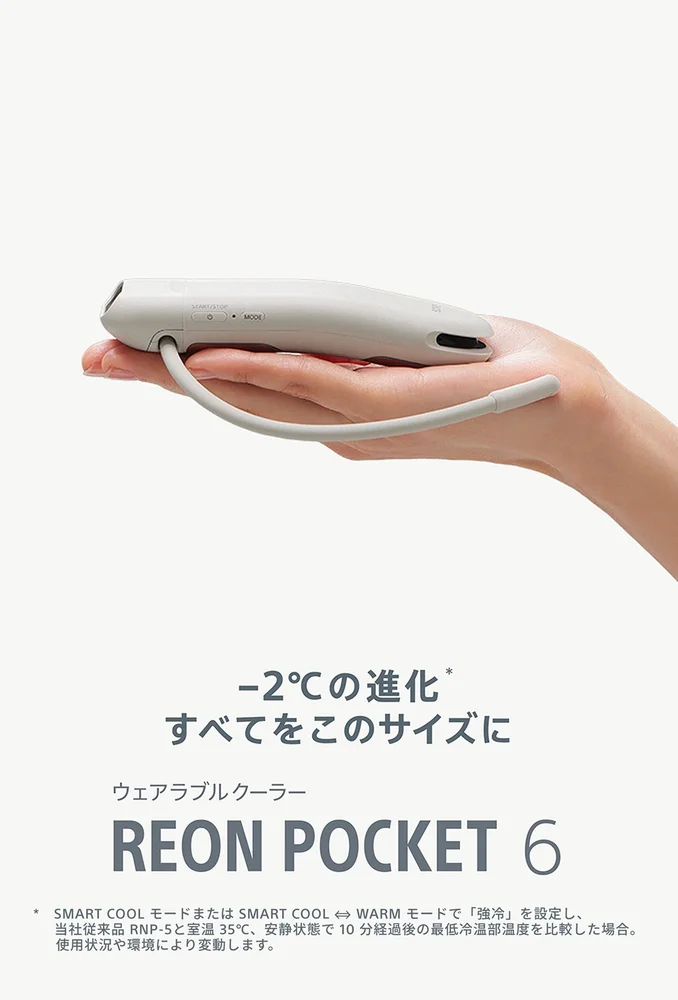
ReleasedSpecifications-led selection¥25,300 JPY≈ €143 EUR · $160 USDECB 2026-10-13JP · Store price · Manufacturer listing; checkout and exact stock not independently verifiedPrice checked 2026-10-12REON POCKET 6 uses a compact module against the upper back, with a neckband holding it beneath clothing. The appeal is a smaller, less conspicuous form than a large fan collar. Cooling and warming are delivered at a stainless-steel contact surface, so stable placement is the key to the experience.
Sony documents a 125 g module and 165 g total with neckband, with five cooling and four warming levels. The RNP-6 identity matters when comparing regional kits: optional ambient-sensing accessories and package contents should not be assumed from a photograph of a different generation. The app also has defined phone requirements.
This manufacturer-backed brief does not establish a controlled comparison with Pro Plus or earlier REON models. Its shortlist position rests on the lighter format and specific contact-cooling approach. Consider it if bulk is the reason you would otherwise leave a neck device at home. Check regional support, the exact kit and how clothing affects placement and airflow. More compact hardware does not guarantee enough perceived cooling for every person, so a trial is more informative than interpreting plate temperature as whole-body relief.
Why #5Fifth for a lighter, discreet format. It can be preferable to larger collars when wearability matters more than a broad airflow pattern.
The compromiseImported kit contents and app support need checking. The contact sensation is local, and clothing or fit can change how effectively the module stays against the skin.
Release date not verifiedFirst retail releaseA released catalogue product or explicitly labelled professional offering; exact first retail date was not established in this review pass.Evidence and original sources
Provisional selection. Manufacturer-backed research brief; no SmartWearGuide hands-on test. Independent comparative performance is not established.
 06First ranking$69.99 USD≈ €63 EURECB 2026-10-13US · New · Store price · Manufacturer listing; checkout and stock not independently verifiedPrice checked 2026-10-12
Neck Fan Pro1 is easier to understand than products labelled personal air conditioners: it circulates ambient air. That can be useful when a breeze feels pleasant and hands-free operation matters. It does not contain the cold contact plates found in thermoelectric collars, so the comparison should begin with airflow rather than temperature claims.
JISULIFE documents a 5,000 mAh battery, roller control with one hundred levels and adjustable width. The fine-grained control is useful if you want to settle on a tolerable balance of breeze and noise rather than jump between a few fixed settings. The stated fifteen-hour maximum is speed-dependent.
The buying decision is mostly ergonomic. Check whether the shape sits comfortably, whether the air reaches the desired area and whether fan noise is acceptable in the intended setting. We have not measured its sound level or air delivery independently. Pro1 earns its place by providing a straightforward function without requiring the buyer to interpret heating-and-cooling modes. In conditions where airflow is ineffective or inappropriate, a stronger fan setting does not magically turn it into a refrigerated cooling device.
Why #6Sixth for a clear, comparatively simple airflow function. It is a sensible category starting point when the user wants a breeze rather than thermal contact.
The compromiseIt moves existing air and does not refrigerate it. Noise, neck fit and speed-dependent endurance should be considered before relying on the maximum runtime.
Release date not verifiedFirst retail releaseA released catalogue product or explicitly labelled professional offering; exact first retail date was not established in this review pass.Evidence and original sources
Provisional selection. Manufacturer-backed research brief; no SmartWearGuide hands-on test. Independent comparative performance is not established.
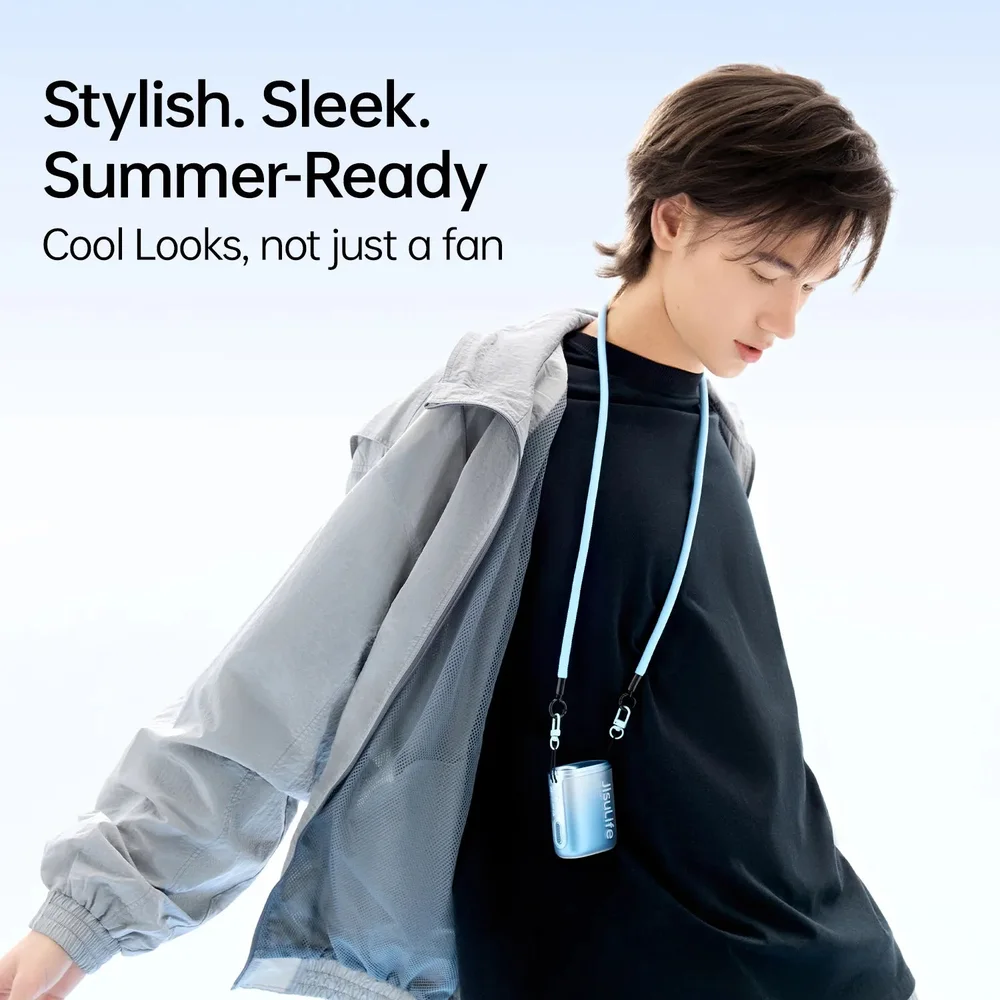 07First rankingAirflow from a compact clip or lanyard format
JISULIFE Neck Fan 5
ReleasedSpecifications-led selection$49.99 USD≈ €45 EURECB 2026-10-13US · New · Store price · Manufacturer listing; checkout and stock not independently verifiedPrice checked 2026-10-12Neck Fan 5 changes the wearing format rather than pretending to reinvent cooling. The compact unit can hang from a lanyard or clip to clothing, offering an alternative to a rigid U-shaped collar. That is useful when neck fit or storage space makes a traditional neck fan inconvenient.
The manufacturer lists a 4,500 mAh battery and three to sixteen hours of runtime, with a roller offering one hundred speed levels. Its quoted airspeed is measured at a stated distance, which should not be compared casually with another fan's figure taken elsewhere. Positioning determines where the moving air actually reaches the wearer.
Choose it for a defined placement: a shirt opening, a lanyard position or another supported attachment. Test whether movement makes it swing or shifts the airflow away from the intended area. We have not independently measured noise, endurance or cooling comfort. The shortlist recognises the practical mounting alternative and compact dimensions. It remains an ambient-air fan, so there is no refrigerated air or thermoelectric skin contact despite the strong airflow language in marketing.
Why #7Seventh for people who prefer a clip or lanyard to a full neck collar. The different attachment method is the main reason to choose it over Pro1.
The compromiseClothing and movement affect placement. Strong airflow can bring more noise and shorter runtime; a high measured airspeed does not establish whole-body cooling.
Release date not verifiedFirst retail releaseA released catalogue product or explicitly labelled professional offering; exact first retail date was not established in this review pass.Evidence and original sources
Provisional selection. Manufacturer-backed research brief; no SmartWearGuide hands-on test. Independent comparative performance is not established.
 08First rankingA lighter thermal-collar alternative
TORRAS COOLiFY 2S Pro (2026)
ReleasedSpecifications-led selection$199 USD≈ €178 EURECB 2026-10-13US · New · Store price · Manufacturer listing; checkout and stock not independently verifiedPrice checked 2026-10-12The 2026 COOLiFY 2S Pro offers contact cooling, heating and airflow in a 435 g collar. That makes its documented weight a useful comparison point against heavier thermal collars, although fit matters more than a small difference on paper. Dual semiconductor modules provide the skin-contact effect while adjustable air channels add ventilation.
TORRAS lists a 5,000 mAh battery and up to twenty-eight hours of use depending on operating mode. The mode qualification is essential: that maximum cannot be used as a full-strength cooling guarantee. The documented app connection and charging specification should also be checked against the exact 2026 model rather than an older 2S listing.
This is a manufacturer-backed research brief, with no independent thermal or acoustic comparison established. The strongest reason to shortlist it is wanting the combined collar concept while reducing worn mass. Try the neck opening, control access and plate contact before deciding that the lighter design is comfortable. A lower weight does not tell us how quickly it cools, how quiet it sounds or how long it lasts at your preferred setting; those remain practical questions for a trial.
Why #8Eighth as a lighter documented option within thermoelectric collars. It should move up if its fit suits the wearer better than higher-ranked alternatives.
The compromiseThe longest runtime is mode-dependent. Confirm the generation, battery package and neck fit, and keep thermal-plate settings separate from claims about body temperature.
Release date not verifiedFirst retail releaseA released catalogue product or explicitly labelled professional offering; exact first retail date was not established in this review pass.Evidence and original sources
Provisional selection. Manufacturer-backed research brief; no SmartWearGuide hands-on test. Independent comparative performance is not established.
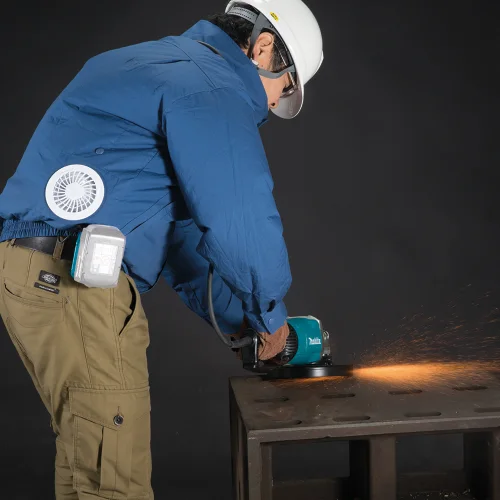 09First rankingPrice not verified
DFJ304 makes sense when the working environment and clothing system favour air circulating inside a jacket. Two recessed fans move air through the garment, with several speed settings and a turbo option. This is ventilation using ambient air, not a refrigerated jacket.
Makita documents a cotton construction, convertible sleeves and compatibility with an 18 V LXT battery. The stated fifteen hours on high uses a particular 5.0 Ah battery, which is sold separately. That detail changes both price and carried weight, especially for someone who does not already own compatible batteries and a charger.
The strongest buying case is a user already invested in the battery platform and working in tasks where the garment and airflow are appropriate. Check worksite clothing requirements, snag risks, dust conditions and whether fan placement interferes with a belt or equipment. We have not independently measured cooling or endurance. This specialist selection rewards a practical power ecosystem and clear garment function, while avoiding a claim that ventilation alone constitutes protection from heat stress or makes every hot task safe.
Why #9Ninth as a professional clothing solution with a useful battery ecosystem. It addresses a different need from commuter collars and wrist comfort devices.
The compromiseBattery and charger add cost and weight. Suitability depends on the worksite and clothing requirements; moving air does not establish safe working conditions in heat.
Release date not verifiedFirst retail releaseA released catalogue product or explicitly labelled professional offering; exact first retail date was not established in this review pass.Evidence and original sources
Provisional selection. Manufacturer-backed research brief; no SmartWearGuide hands-on test. Independent comparative performance is not established.
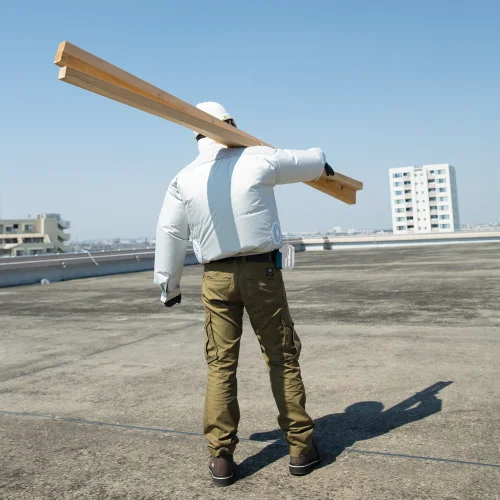 10First rankingA coated-polyester alternative in a fan-jacket system
Makita DFJ405 fan jacket
ReleasedSpecifications-led selectionPrice not verifiedDFJ405 uses the same general fan-jacket concept with a titanium-coated polyester construction. That fabric choice is the reason to compare it with DFJ304 rather than treating the model number as a universal upgrade. The wearer still needs a garment suitable for the actual work, not merely the most elaborate material description.
The documented arrangement includes two recessed fans, adjustable speeds, convertible sleeves and an 18 V LXT battery connection. Makita's fifteen-hour high-setting claim depends on a 5.0 Ah battery sold separately. The full purchase therefore includes the jacket, correct battery and charging arrangements, with carried mass assessed as a complete system.
We would shortlist it alongside the cotton model for an employer or worker evaluating garment material, movement and airflow in a specific task. No independent comparison of fabric heat performance or durability was established in this pass, so the coating should not be translated into a quantified cooling advantage. Check maintenance instructions, replacement parts and compatibility with other required equipment. It earns the final place as a distinct material option within a documented professional ventilation system.
Why #10Tenth for users whose garment requirements favour coated polyester over cotton. The material choice is task-dependent rather than an overall performance ranking.
The compromiseBattery costs are additional, and a coating does not prove superior comfort in every climate. Workplace suitability and ordinary heat-management measures remain necessary.
Release date not verifiedFirst retail releaseA released catalogue product or explicitly labelled professional offering; exact first retail date was not established in this review pass.Evidence and original sources
Provisional selection. Manufacturer-backed research brief; no SmartWearGuide hands-on test. Independent comparative performance is not established.
Ranking history
This is the first published edition. Previous positions will appear after a real revision.
Edition 1 · Oct 13, 2026 · Current
2026-10-13: Added ten substantive model-specific reviews, explained placement and tradeoffs, and distinguished firsthand reporting from manufacturer-backed briefs. Follow-up added exact-model firsthand and laboratory evidence to eleven more entries; provisional placement is now explicit.
How we choose and track positions
SmartWearGuide’s order is an editorial judgment from linked specifications and published testing. We have not performed house hands-on tests. We prioritise a useful daily job, fit, compatibility, complete cost, software support and the strength of the evidence. Category-specific criteria appear on each list. Lower-confidence and specialist selections are labelled; a higher rank cannot guarantee a better fit for you.
Current-product lists contain released, unrecalled models and explicitly labelled professional equipment. The Frontier & research selection is a separate research watchlist, not a shopping recommendation. Music & creative wearables explicitly separates eight released choices from two preorder or reservation projects. Best Upcoming covers announced products and early evidence. A released product is not necessarily in stock in your country. No brand pays for a place in these lists.
History begins with the first edition published here. Each substantive revision appends a dated edition and reason; past editions are preserved. Up, down and previous position compare the latest two published editions of the same list. We do not invent an earlier chart, move products to manufacture news, or turn an announcement date into a shipment date.