
Our Top 10 Neurotech & body control
Ten task-specific selections in a provisional editorial order, with review evidence and gaps explained.
Browse & filter Categories, features & sorting
How price order works
Lowest recorded store prices take priority over announced or launch prices, within the selected source market. Currencies use the dated EUR reference rates. Deposits and recurring charges are excluded from price order; missing prices stay last. Original price records remain visible.
10 current selections
 01First ranking€449.99 EUR≈ $503 USDECB 2026-10-13EU · Store price · Listed availablePrice checked 2026-10-12
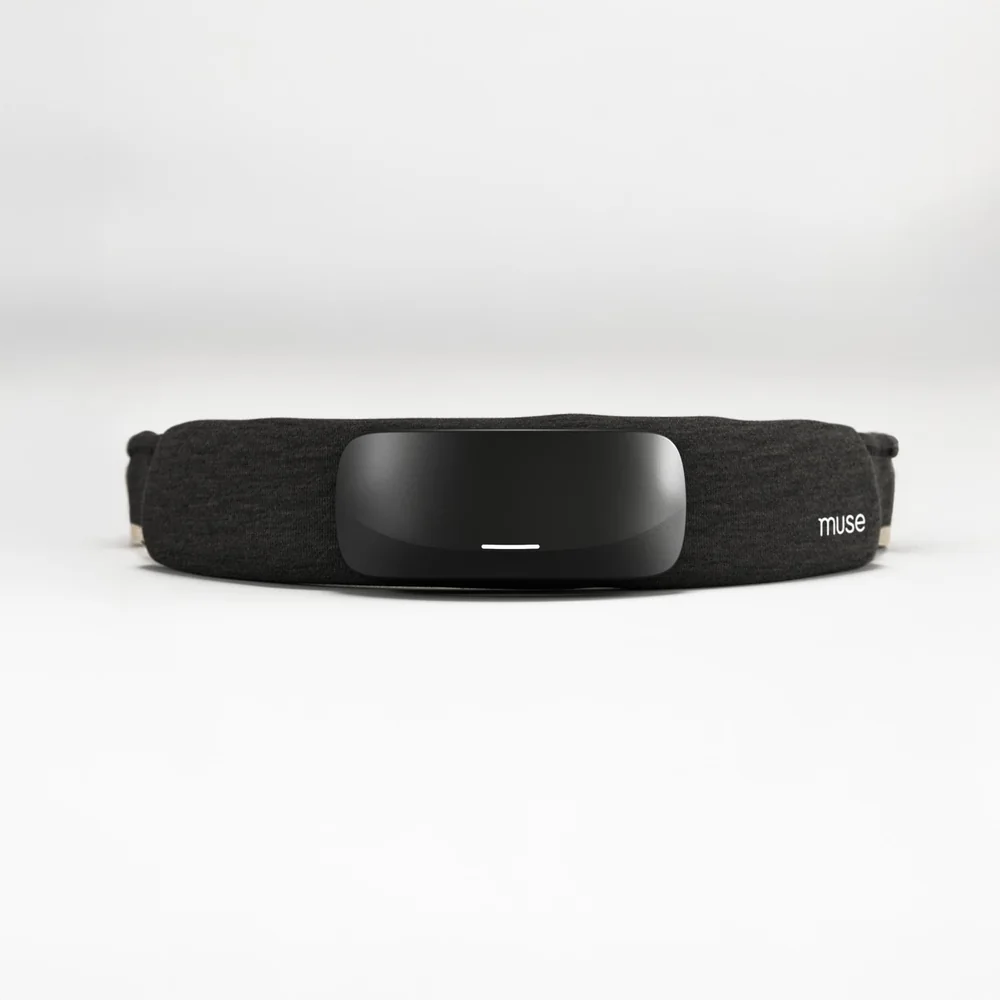
Athena earns the opening place by turning an unfamiliar measurement into an activity people can actually try: sit down, fit the headband and use changing audio as feedback during meditation. Its soft construction also makes overnight use plausible. The combination of EEG, optical sensing and motion capture gives it a broader purpose than a single meditation score, although more sensors do not automatically make every app interpretation clinically meaningful.
Ruth Jones at Tom's Guide found the exact Athena comfortable through the night and liked its responsive sleep audio. She also struggled with contact behind the ears and stopped wearing it on especially hot nights. That is a useful counterweight to the polished product images: successful tracking starts with contact and willingness to wear the band.
Choose this for a repeatable meditation routine, with sleep information as an additional experiment. Establish a consistent fit before comparing sessions, and inspect which content requires Premium. Research on earlier Muse hardware should not be presented as validation of every Athena metric. Its lead here reflects approachable daily use, not a claim that it improves everyone's sleep or outperforms laboratory EEG.
Why #1First for the clearest consumer routine and exact-model use reporting. Developer headsets offer better access for experiments, but demand much more setup and interpretation.
The compromiseHead contact, hair and heat can interfere with comfort. Scores are wellness feedback, and paid content can add to the hardware cost.
Release date not verifiedFirst retail releaseA released catalogue product or explicitly labelled professional offering; exact first retail date was not established in this review pass.Evidence and original sources
Manufacturer documentation plus attributed original review evidence. No SmartWearGuide hands-on test; reviewer experience is not a universal result.
 02First ranking$249.99 USD≈ €223 EURECB 2026-10-13US · New · Store price · Manufacturer listing; checkout and stock not independently verifiedPrice checked 2026-10-12
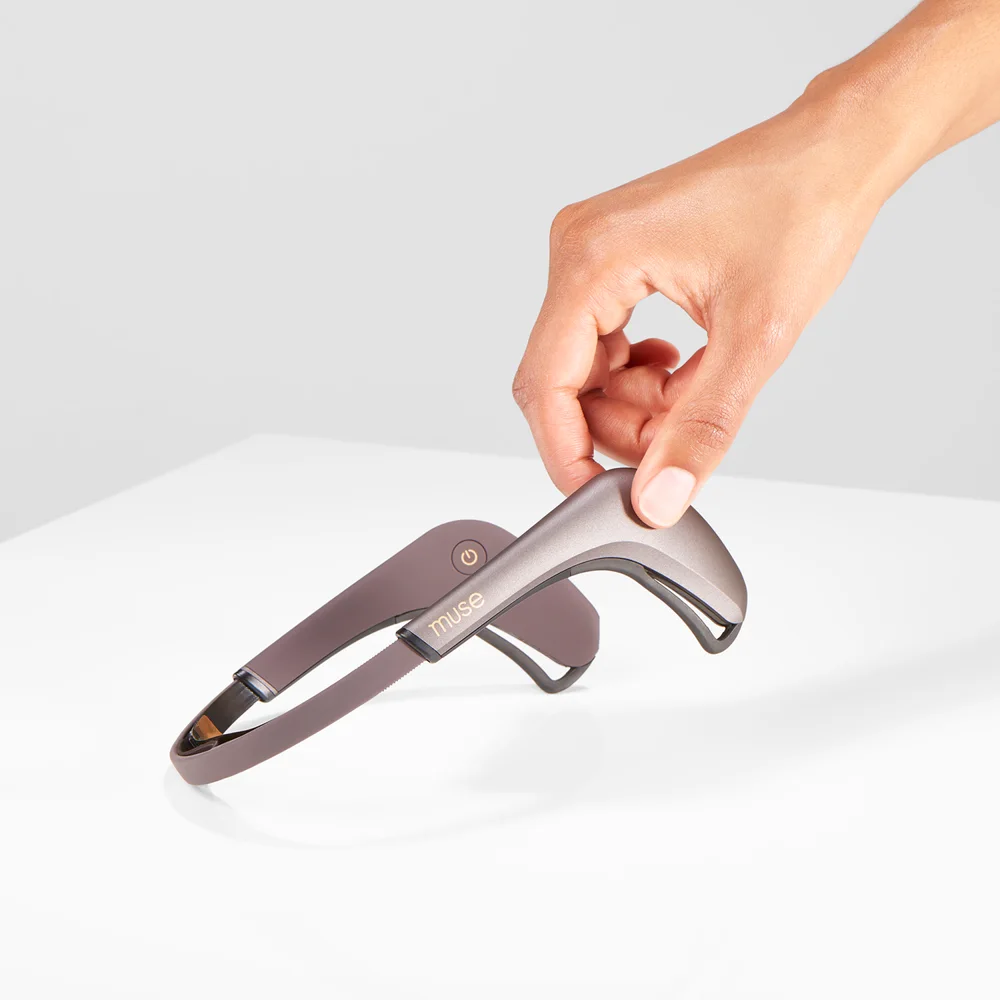
Muse 2 is the more focused choice if the actual goal is to practise meditation rather than collect another night of sleep graphs. Four EEG channels sit alongside optical heart sensing and motion sensors in a light, rigid band. The attraction is immediate feedback during a deliberate session: the hardware has a defined task instead of promising to interpret every part of your mental life.
Laura Juozaponytė used Muse 2 for a month for Wareable in 2026. She found the feedback motivating for maintaining a meditation streak, while questioning its value beyond motivation and reporting connectivity problems. Kieran Alger's earlier exact-model test also liked the guidance and light fit but encountered app and connection trouble. Together, these reports support its appeal as a practice aid, not a validated shortcut to deeper mindfulness.
Its strongest buying argument is restraint. Someone who already knows that live meditation feedback motivates them may have little reason to pay for broader sensing. Check the current app offer and the difference between included feedback and optional content before choosing a bundle. Neither review establishes that a higher calm score transfers into better concentration at work. The older report also cannot establish the behaviour of today's software.
Why #2Second because it gives meditation users a narrower, more understandable alternative to Athena. Its position rewards suitability for that task rather than a supposedly superior brain score.
The compromiseThe rigid fit will not suit every head. Fixed electrode locations and the consumer app restrict research flexibility; it is not a diagnostic instrument.
Release date not verifiedFirst retail releaseA released catalogue product or explicitly labelled professional offering; exact first retail date was not established in this review pass.Evidence and original sources
Manufacturer documentation plus attributed exact-model firsthand or laboratory evidence. No SmartWearGuide hands-on test; results remain specific to the tested conditions.
 03First ranking$499 USD≈ €446 EURECB 2026-10-13US · Store price · ListedPrice checked 2026-10-12
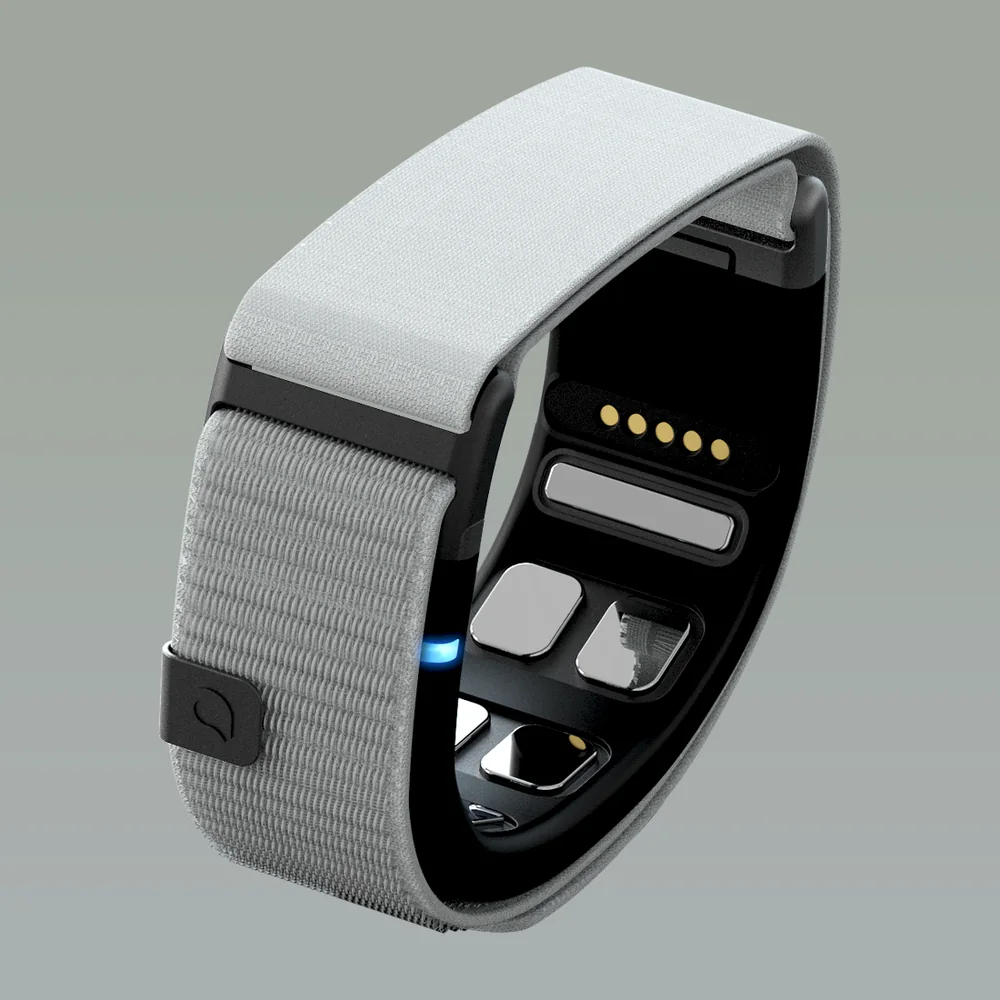
Mudra Link is interesting because its result is concrete: a finger movement becomes a mouse or keyboard command. It reads signals at the wrist rather than measuring brain activity through a headband. That distinction matters. You are buying an input accessory, not a device that understands thoughts, and the useful question is whether its gestures make a particular interaction easier.
Cybernews' exact Mudra Link trial found the phone tutorial approachable and touch-free recipe navigation useful. The same reviewer struggled with cursor precision on a MacBook and accidental or unreliable actions on Apple TV. These are material limits, not minor setup footnotes: the gesture interface that feels promising for one task may remain frustrating in another. The retrieved article does not expose an individual byline, so attribution stays with the publication.
The most promising use is a small, reliable collection of commands: controlling a presentation, navigating a display or triggering repeated actions when reaching for a conventional mouse is awkward. Start with those tasks and assess false activations and fatigue in your own setup. A long list of potential device connections does not prove equal support for every app or gesture, and this research brief cannot establish recognition accuracy.
Why #3Third as an experimental input option within this provisional shortlist, not a broad buying endorsement. The exact-model review gives enough reliability concerns that a returnable personal trial should precede adoption.
The compromiseExpect configuration and practice. Supported host software and Bluetooth behaviour should be checked for the exact computer or headset you plan to control.
Release date not verifiedFirst retail releaseA released catalogue product or explicitly labelled professional offering; exact first retail date was not established in this review pass.Evidence and original sources
Manufacturer documentation plus attributed exact-model firsthand or laboratory evidence. No SmartWearGuide hands-on test; results remain specific to the tested conditions.
 04First ranking$199 USD≈ €178 EURECB 2026-10-13US · Store price · Listed availablePrice checked 2026-10-12
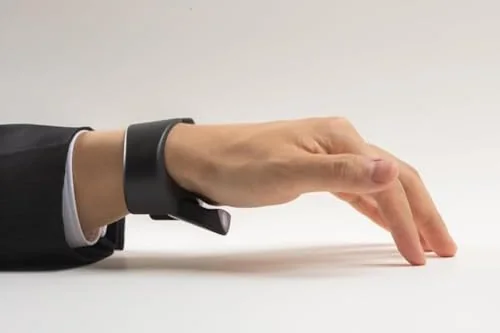
TapXR is a keyboard-and-pointer experiment worn at the wrist. Its appeal is portability: the interaction travels with you when a desk-sized keyboard is impractical. The manufacturer documents keyboard, mouse and AirMouse modes, plus custom keybinds, hotkeys, text strings and macros. That makes a handful of specialised shortcuts a more credible starting point than expecting immediate full-speed typing.
Julie Strietelmeier tested a manufacturer-supplied TapXR for The Gadgeteer. She liked remapping and macros, but found multi-finger combinations difficult and could not reproduce the advertised surface flexibility on her leg or couch. She did not adopt it as a replacement for touch typing. That makes dexterity, hand posture and daily practice central buying conditions rather than optional refinements.
Choose it when the constraint is physical space or repeated commands, and be prepared to practise. A standard keyboard remains the obvious comparison for sustained writing; an ordinary mouse is the comparison for precise pointing. We have not measured TapXR typing speed, fatigue or recognition accuracy, so those outcomes should not be inferred from its compatibility list. Its place here recognises an unusually adaptable interface rather than a proven productivity gain.
Why #4Fourth as a provisional specialist shortcut tool, not a recommendation to replace a keyboard. The firsthand difficulty report argues for a returnable trial and a narrowly defined use case.
The compromiseLearning time is part of the purchase. Device compatibility does not establish support for every shortcut, game or operating-system permission.
Release date not verifiedFirst retail releaseA released catalogue product or explicitly labelled professional offering; exact first retail date was not established in this review pass.Evidence and original sources
Manufacturer documentation plus attributed exact-model firsthand or laboratory evidence. No SmartWearGuide hands-on test; results remain specific to the tested conditions.
 05First ranking$1,499 USD≈ €1,340 EURECB 2026-10-13US · Store price · ListedPrice checked 2026-10-12
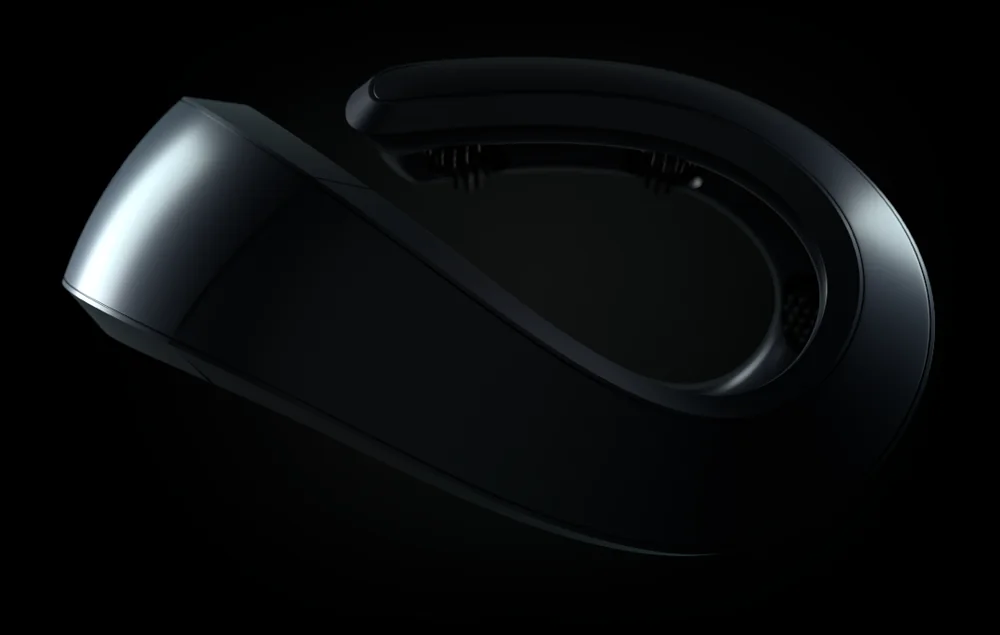
Crown is for someone who wants to work with brain-signal data rather than simply follow a guided meditation. Its eight-channel layout, onboard computing and wireless connectivity create a self-contained development platform. The visible difference from a light consumer headband is also the practical one: this is equipment you intentionally put on for a session, not an invisible all-day wearable.
Neurosity documents 256 Hz sampling, dry electrodes, Wi-Fi and Bluetooth, with a 228 g weight and around three hours of runtime. Those specifications favour desk-based experiments and shorter recording sessions. Eight channels offer more spatial choices than a four-channel band, but the documented positions remain fixed; adding channels does not remove movement artefacts or turn a consumer recording into a clinical interpretation.
The buying case is strongest when you already know the software workflow you want to build. Confirm access to the required data and development interfaces, and budget time for electrode contact and signal inspection. A focus score may be an interesting feedback signal, but this review does not validate it as a measurement of useful work or intelligence. Crown belongs in a development shortlist, with the extra weight accepted in exchange for its integrated processing and connectivity.
Why #5Fifth for its integrated EEG development architecture. It sits below easier consumer tools because the payoff requires technical work and a defined experiment.
The compromiseDry electrodes still need good contact. The three-hour stated runtime and 228 g weight make comfort and charging more material than on a lightweight meditation band.
Release date not verifiedFirst retail releaseA released catalogue product or explicitly labelled professional offering; exact first retail date was not established in this review pass.Evidence and original sources
Provisional selection. Manufacturer-backed research brief; no SmartWearGuide hands-on test. Independent comparative performance is not established.
 06First rankingMultichannel EEG projects with an established toolchain
EMOTIV EPOC X
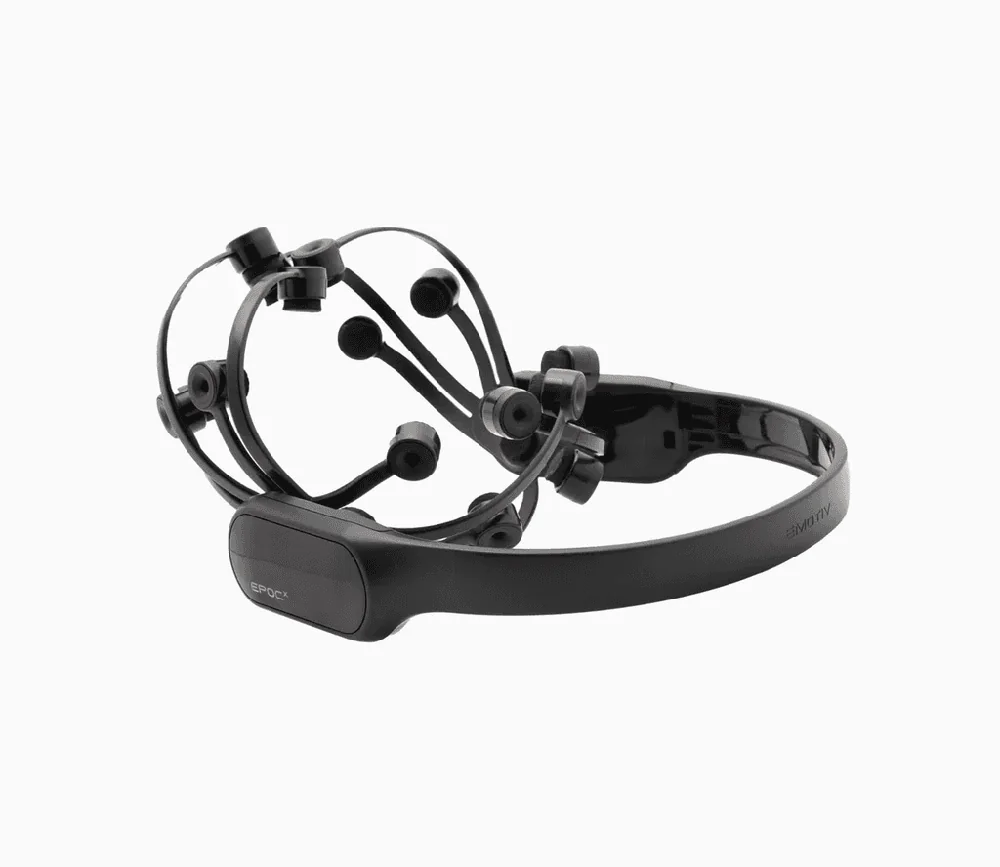
ReleasedSpecifications-led selection$1,199 USD≈ €1,072 EURECB 2026-10-13US · Store price · Listed availablePrice checked 2026-10-12EPOC X offers a practical middle ground between a small wellness band and a full research cap. Its fourteen EEG channels and two reference points allow a broader recording montage, while its adjustable headband keeps the equipment relatively contained. This is a research and personal experimentation product, not a shortcut to diagnosing a condition from home.
The manufacturer specifies saline-soaked felt electrodes, selectable 128 or 256 Hz sampling and motion sensing. Saline is a meaningful part of the ownership experience: preparation and electrode maintenance must be included in a session, not treated as an invisible detail. The nominal nine-hour battery figure is useful for planning, but uninterrupted usable data also depends on contact and the recording environment.
The decisive purchase question is software access. Make sure the licence and tools you intend to use provide the raw signals, export and analysis you need. Buying the headset alone does not necessarily buy every research workflow shown in demonstrations. We would shortlist EPOC X for a structured project with a protocol and an operator, rather than someone looking for an effortless daily focus score. No independent signal-quality comparison was established in this pass.
Why #6Sixth for channel coverage and a documented research workflow. Preparation, software choices and data interpretation make it less approachable than the consumer-facing options above.
The compromiseSaline electrodes require upkeep, and software licences affect total cost. Its data should not be interpreted as a medical diagnosis.
Release date not verifiedFirst retail releaseA released catalogue product or explicitly labelled professional offering; exact first retail date was not established in this review pass.Evidence and original sources
Provisional selection. Manufacturer-backed research brief; no SmartWearGuide hands-on test. Independent comparative performance is not established.
 07First ranking$499 USD≈ €446 EURECB 2026-10-13US · New · Store price · Manufacturer listing; checkout and stock not independently verifiedPrice checked 2026-10-12
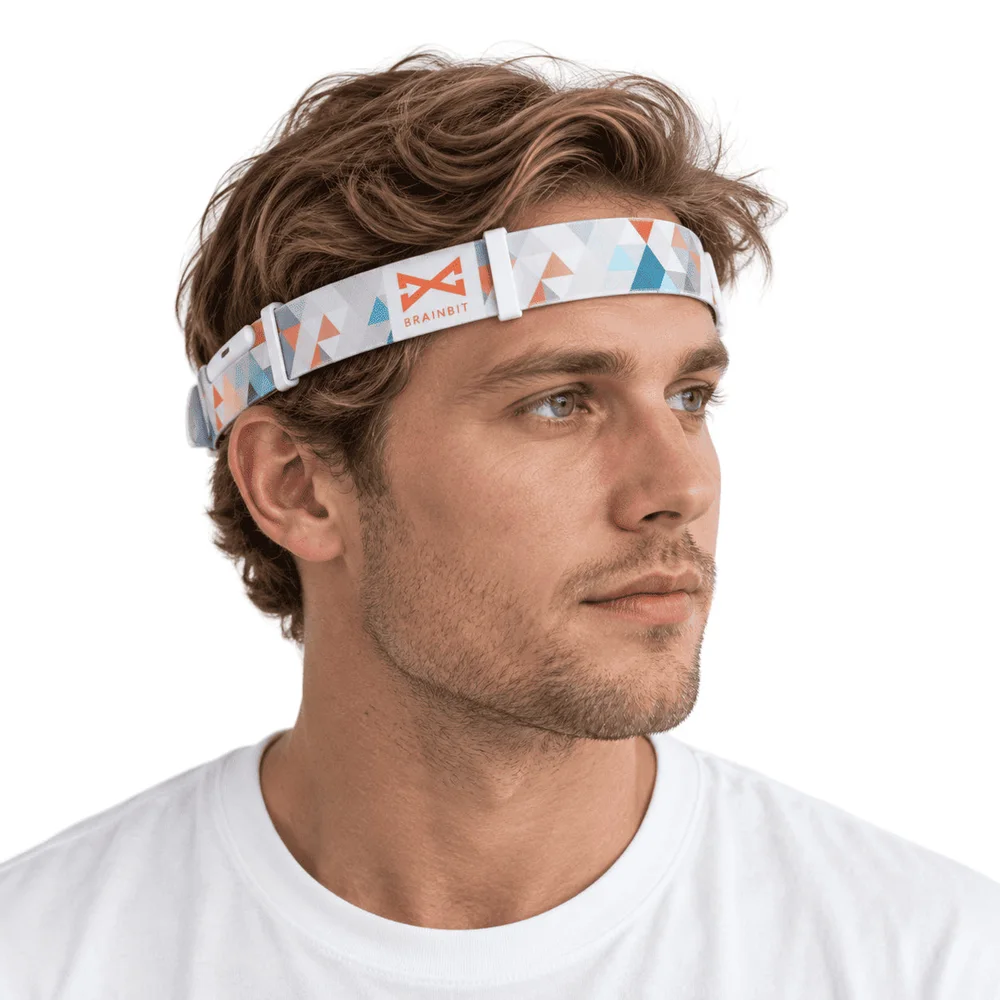
The standard BrainBit headband is a comparatively focused acquisition device: four dry channels at temporal and occipital sites, Bluetooth Low Energy and a manufacturer SDK. Its appeal is the relatively uncomplicated physical setup when those electrode positions match the intended experiment. It is a poor purchase if the project actually needs frontal coverage or a full-head map.
The manufacturer documents 250 Hz sampling, gold-plated spring contacts and up to twelve hours of battery life. The placement is more important than the runtime headline. An experiment concerned with a different brain region cannot be made appropriate simply by collecting for longer, and dry contacts still need checking before a session begins.
For a developer, the useful approach is to decide the required signals and processing before buying, then verify that the SDK exposes those outputs on the intended platform. The headband earns consideration because its limited scope is understandable and its development route is documented. We have not established an independent comparison of signal quality, comfort or long-term electrode durability, so the recommendation is conditional on project requirements rather than a claim of superior EEG performance.
Why #7Seventh as an accessible acquisition tool for a specific four-channel layout. Broader recording requirements justify the Pro or Flex options instead.
The compromiseThe fixed sites are a real constraint. SDK integration, contact quality and interpretation remain the user's responsibility; the band is not a ready-made medical assessment.
Release date not verifiedFirst retail releaseA released catalogue product or explicitly labelled professional offering; exact first retail date was not established in this review pass.Evidence and original sources
Provisional selection. Manufacturer-backed research brief; no SmartWearGuide hands-on test. Independent comparative performance is not established.
 08First ranking$1,199 USD≈ €1,072 EURECB 2026-10-13US · New · Store price · Manufacturer listing; checkout and stock not independently verifiedPrice checked 2026-10-12
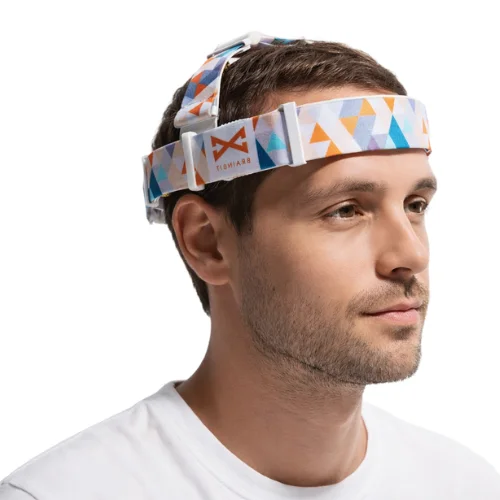
Headband Pro adds recording coverage and positioning options without immediately moving to a full cap. The eight-channel design and optional central strap are the reasons to consider it over the standard BrainBit band. For a developer who needs central sites as well as frontal, temporal or occipital contacts, that changes which experiments are physically possible.
The documented system uses replaceable dry gold-plated contacts and 250 Hz sampling, with BrainBit SDK support. Replaceable contacts matter for maintenance, while the modular fitting arrangement means setup must be repeated carefully if results from different sessions are to be compared. A flexible construction is useful only if the chosen locations stay consistent and the contact remains stable.
This belongs on a research shopping list once the electrode montage has been defined. Ask which included components support that layout, how the software reports contact quality, and how data will be exported or processed. More channels can provide more information, but they also create more opportunities for poor contact and noisy recordings. We did not establish a firsthand comparative test, so the appeal here is the documented hardware flexibility rather than an independently measured accuracy advantage.
Why #8Eighth because its modular eight-channel arrangement solves a more specialised problem than the simpler BrainBit band. It should move up for projects that specifically need those sites.
The compromiseConsistent fitting becomes more involved as contacts multiply. Confirm the exact kit and software configuration rather than assuming every illustrated placement is included.
Release date not verifiedFirst retail releaseA released catalogue product or explicitly labelled professional offering; exact first retail date was not established in this review pass.Evidence and original sources
Provisional selection. Manufacturer-backed research brief; no SmartWearGuide hands-on test. Independent comparative performance is not established.
 09First rankingCustom electrode positions in a compact research cap
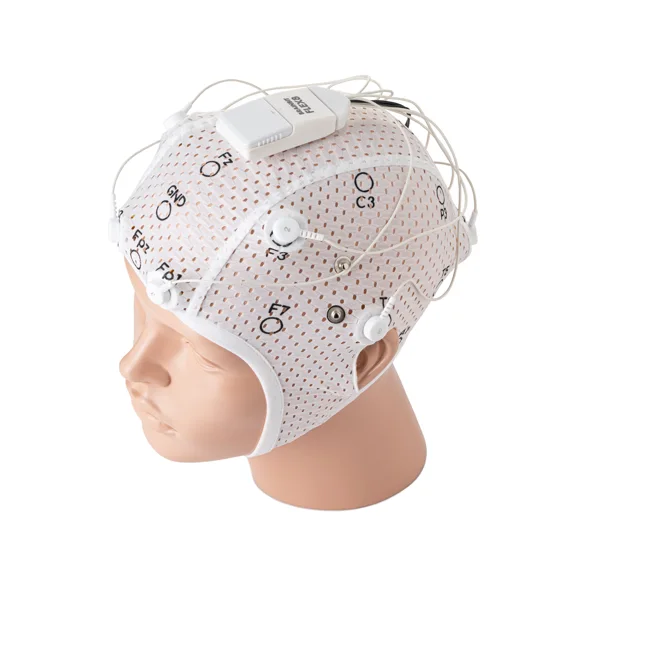
BrainBit Flex8
ReleasedSpecifications-led selection$1,200 USD≈ €1,073 EURECB 2026-10-13US · New · Store price · Manufacturer listing; checkout and stock not independently verifiedPrice checked 2026-10-12Flex8 is a better starting point than a fixed headband when the experiment determines the electrode positions. The cap supports eight channels placed at selected locations in the 10-20 system, with dry and wet electrode options. That flexibility is its core value: you choose coverage for the question being studied instead of adapting the question to a consumer device's fixed contacts.
The manufacturer lists 250 Hz sampling, Bluetooth Low Energy and twelve-hour battery life. Those are acquisition specifications, not proof that a particular cognitive score is meaningful. Wet and dry configurations bring different preparation and maintenance needs, so the electrode option should be selected alongside the protocol and the people who will wear the cap.
We would favour Flex8 for a small lab or development team that can manage placement, reference configuration and signal inspection. It is unnecessarily involved for someone who only wants guided relaxation. Before ordering, check included electrodes, cap sizing, software access and replacement parts. The current brief is based on manufacturer documentation; it does not establish superiority over other eight-channel systems or supply a clinical validation for any downstream algorithm.
Why #9Ninth for adaptable electrode placement rather than everyday simplicity. A defined research montage can make it the right choice despite its lower general-use position.
The compromiseCap fit, electrode preparation and analysis expertise add work. The available evidence does not justify treating every app or algorithm used with it as validated.
Release date not verifiedFirst retail releaseA released catalogue product or explicitly labelled professional offering; exact first retail date was not established in this review pass.Evidence and original sources
Provisional selection. Manufacturer-backed research brief; no SmartWearGuide hands-on test. Independent comparative performance is not established.
 10First ranking$2,399 USD≈ €2,144 EURECB 2026-10-13US · Starting price · Manufacturer listing; checkout and exact stock not independently verifiedPrice checked 2026-10-12
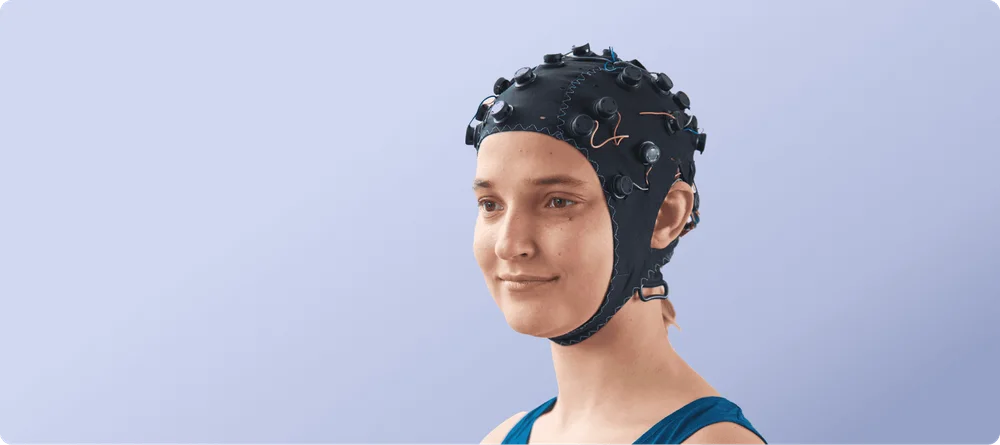
FLEX 2.0 sits at the serious research end of this shortlist. Its thirty-two configurable channels and cap-based placement offer substantially more coverage than a meditation headband. That is valuable when a study needs a defined montage across the head, but it is also why FLEX should not be sold as the obvious upgrade for a casual user.
Emotiv documents gel or saline sensor kits, wireless streaming and selectable output sampling. The manual distinguishes internal sampling from delivered data, an important detail when comparing headline specifications. Its stated six-hour battery life is a planning figure for the hardware; session preparation, impedance or contact checks and cleaning still require time around the recording itself.
The sensible purchase process starts with the research protocol and software licence. Confirm raw-data access, export formats, synchronisation requirements and the actual kit contents before comparing prices. This product offers a framework for acquiring data, not automatic scientific conclusions. We have not reviewed an independent head-to-head validation of this exact system in this pass. Its place is therefore a transparent specialist selection based on configurable coverage, with operation and analysis treated as skilled work.
Why #10Tenth because it is the most demanding specialist workflow in this consumer-to-research ordering. For a study needing thirty-two channels, it may be more appropriate than every simpler device above.
The compromiseHardware, consumables and software should be costed together. Setup and interpretation require expertise; this shortlist is not a clinical endorsement.
Release date not verifiedFirst retail releaseA released catalogue product or explicitly labelled professional offering; exact first retail date was not established in this review pass.Evidence and original sources
Provisional selection. Manufacturer-backed research brief; no SmartWearGuide hands-on test. Independent comparative performance is not established.
Ranking history
This is the first published edition. Previous positions will appear after a real revision.
Edition 1 · Oct 13, 2026 · Current
2026-10-13: Added ten substantive model-specific reviews, explained placement and tradeoffs, and distinguished firsthand reporting from manufacturer-backed briefs. Follow-up added exact-model firsthand and laboratory evidence to eleven more entries; provisional placement is now explicit.
How we choose and track positions
SmartWearGuide’s order is an editorial judgment from linked specifications and published testing. We have not performed house hands-on tests. We prioritise a useful daily job, fit, compatibility, complete cost, software support and the strength of the evidence. Category-specific criteria appear on each list. Lower-confidence and specialist selections are labelled; a higher rank cannot guarantee a better fit for you.
Current-product lists contain released, unrecalled models and explicitly labelled professional equipment. The Frontier & research selection is a separate research watchlist, not a shopping recommendation. Music & creative wearables explicitly separates eight released choices from two preorder or reservation projects. Best Upcoming covers announced products and early evidence. A released product is not necessarily in stock in your country. No brand pays for a place in these lists.
History begins with the first edition published here. Each substantive revision appends a dated edition and reason; past editions are preserved. Up, down and previous position compare the latest two published editions of the same list. We do not invent an earlier chart, move products to manufacture news, or turn an announcement date into a shipment date.